Some museums announce themselves from a distance, with an imposing façade, a ticket office and a line of visitors waiting outside. The Redpath Museum isn’t really one of them. To find it, you first have to step onto the McGill University campus, leave the bustle of Sherbrooke Street behind and, almost without transition, find yourself in a completely different Montreal.
In fact, that may have been one of my favourite things about it before I had even walked through the museum doors.
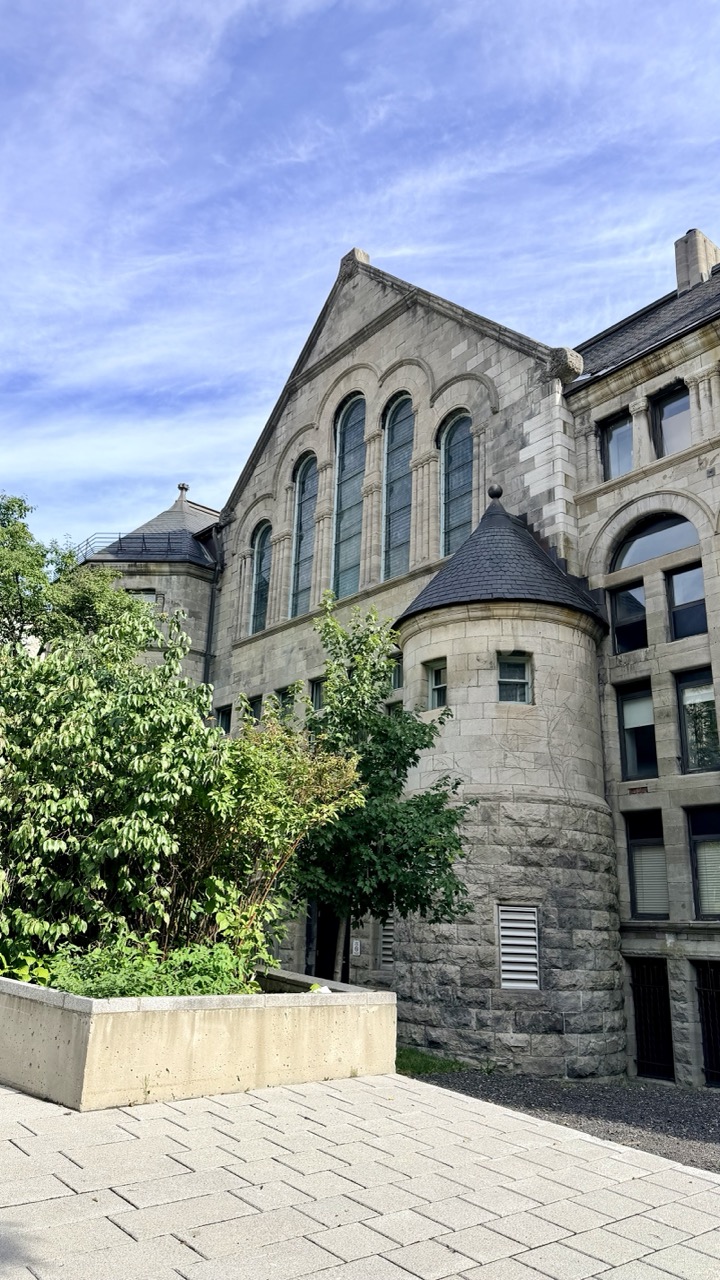
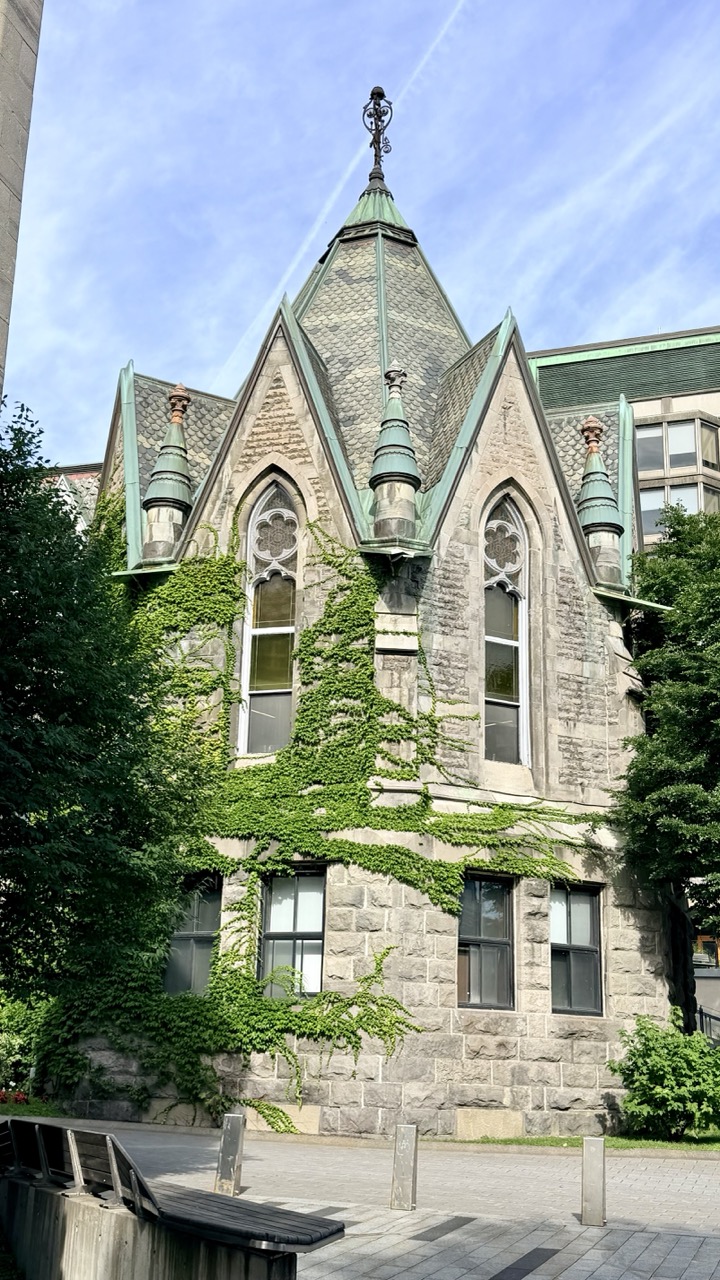
Just a few metres from downtown, the traffic and the high-rises, the campus unfolds at the foot of Mount Royal, with lawns, trees and, above all, old grey-stone buildings. Some date back to the 19th century, and together they give McGill an almost European atmosphere, with classical façades, stone staircases, columns and tall windows contrasting with the modern towers rising behind them.
And there, in the middle of it all, is the Redpath.
Before you even know what lies inside, the building itself is worth stopping to admire.
A Museum That Already Feels Like a Museum Piece
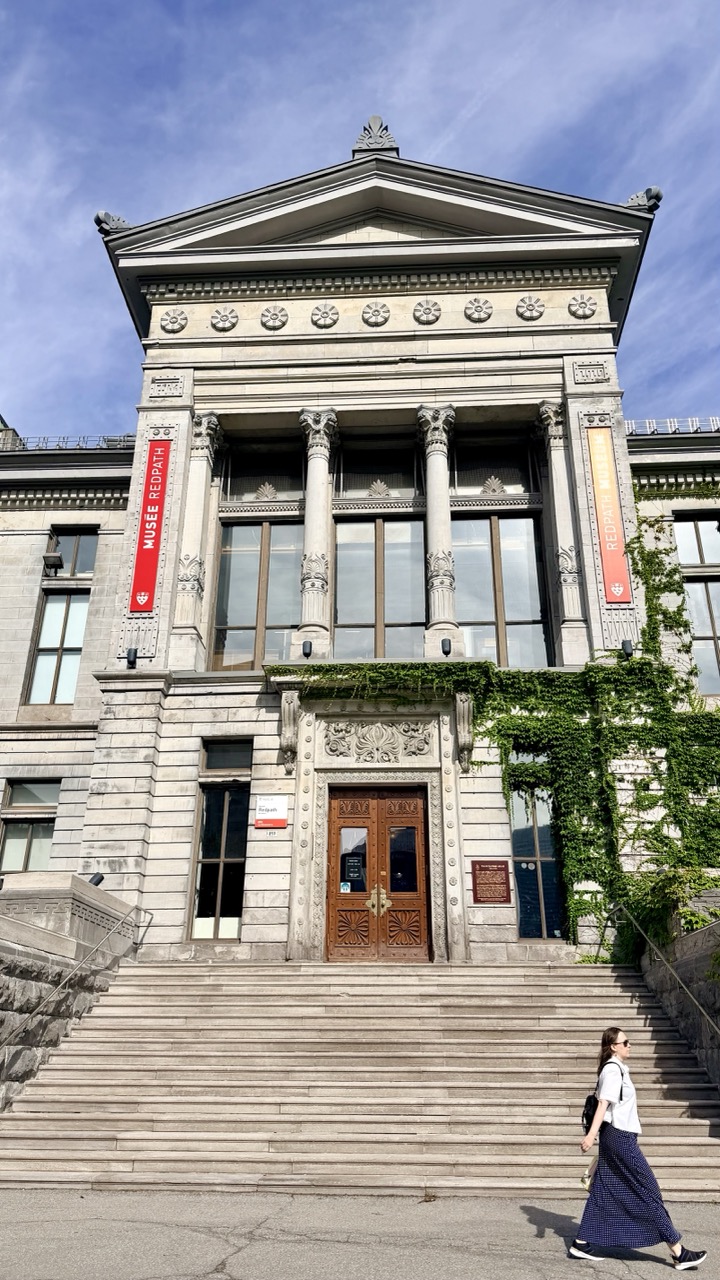
The Redpath Museum opened in 1882, making it one of the oldest museums in Canada and, more importantly, the oldest building in the country constructed specifically to house a museum. It was commissioned by businessman and philanthropist Peter Redpath to preserve and display the collections of naturalist Sir William Dawson, who was then principal of McGill.
Architects A.C. Hutchison and A.D. Steele designed a rather extraordinary building, blending Victorian classicism with references to ancient Greece. Its Montreal limestone façade, pediment, columns and overall symmetry make it feel almost like a small temple set in the middle of the campus.
Once inside, that sense of stepping back in time continues.
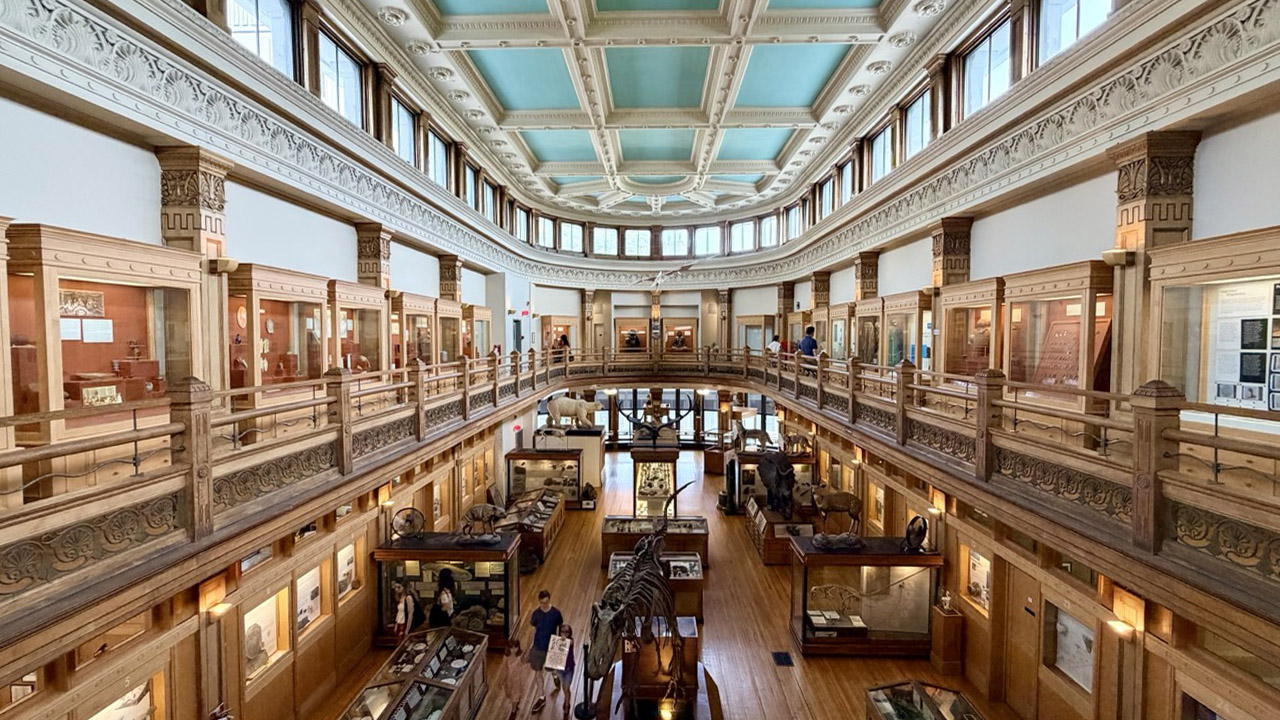
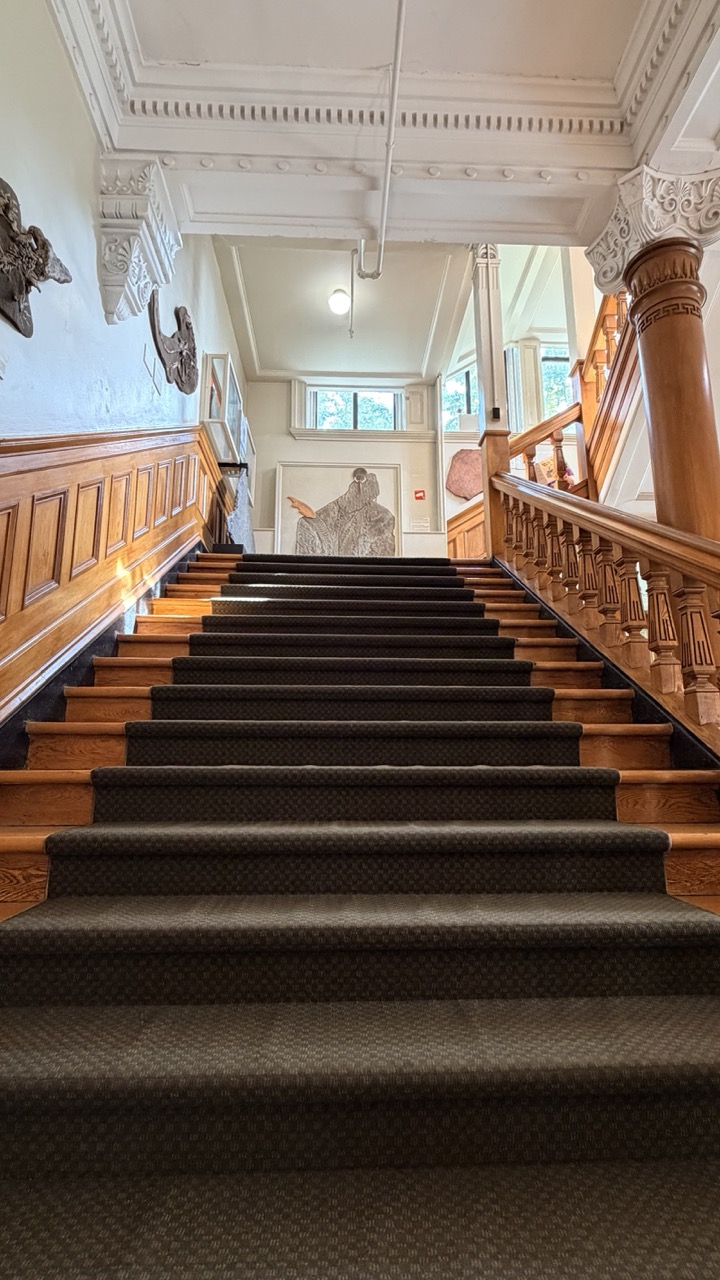
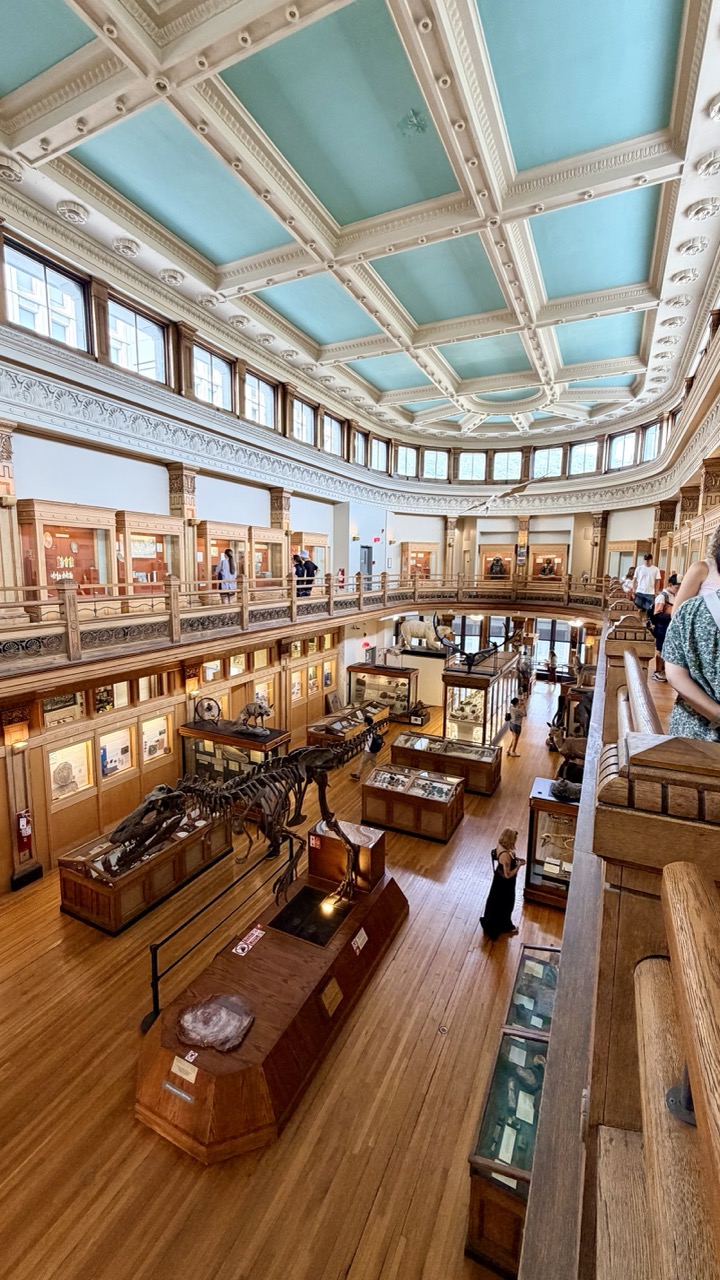
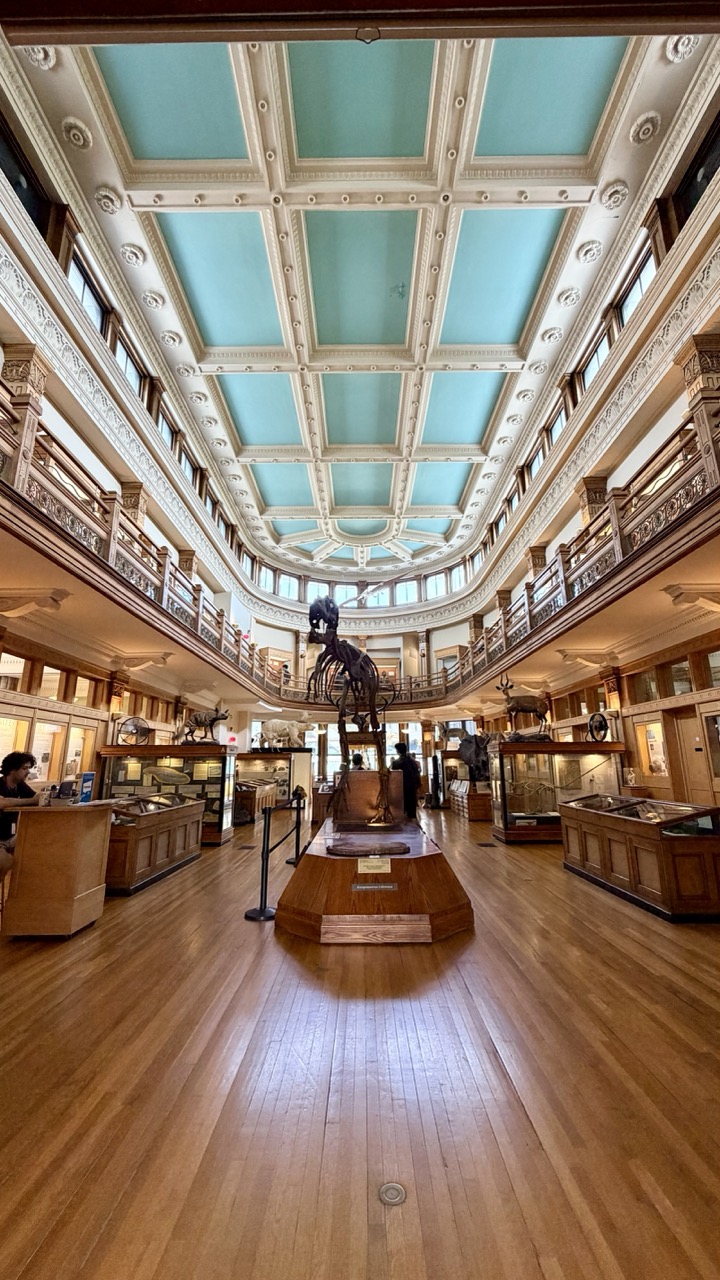
This is nothing like a large contemporary natural history museum, with enormous screens, dramatic exhibition design and a perfectly signposted route. Here, there is wood, old display cases, a sweeping central staircase, galleries stacked one above another and Victorian architecture that you find yourself admiring alongside the collections.
And ultimately, that is part of its charm.
Admission by Voluntary Contribution
Another fairly unusual feature in Montreal is that there is no mandatory admission ticket to enter the Redpath Museum. General admission operates on a voluntary contribution basis.
The museum suggests an amount, but it really is a donation rather than a fixed entrance fee. So if you are travelling on a tight budget, it is possible to visit without paying.
That said, after seeing the museum, I felt that this was exactly the kind of place I would want to support whenever I could afford to. The building is old, the collections are fragile, and keeping a museum like this open to the public inevitably requires resources.
A Small Museum With Far More Inside Than You Might Expect
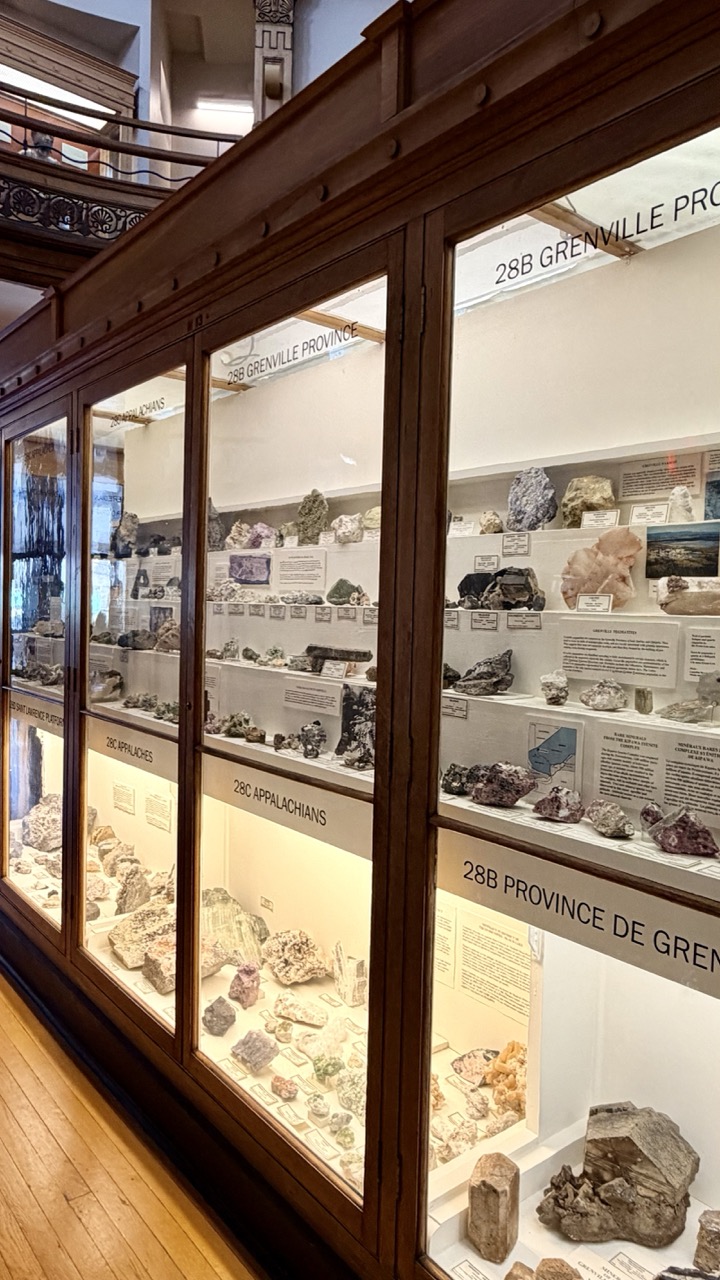
The Redpath is spread over three levels surrounding a large central hall. It isn’t enormous, and you can easily explore the whole museum without devoting an entire day to it. Yet its collections are surprisingly varied, covering palaeontology, zoology, mineralogy and archaeology, as well as objects from cultures around the world.
What particularly intrigued me was the way some of the pieces are presented.
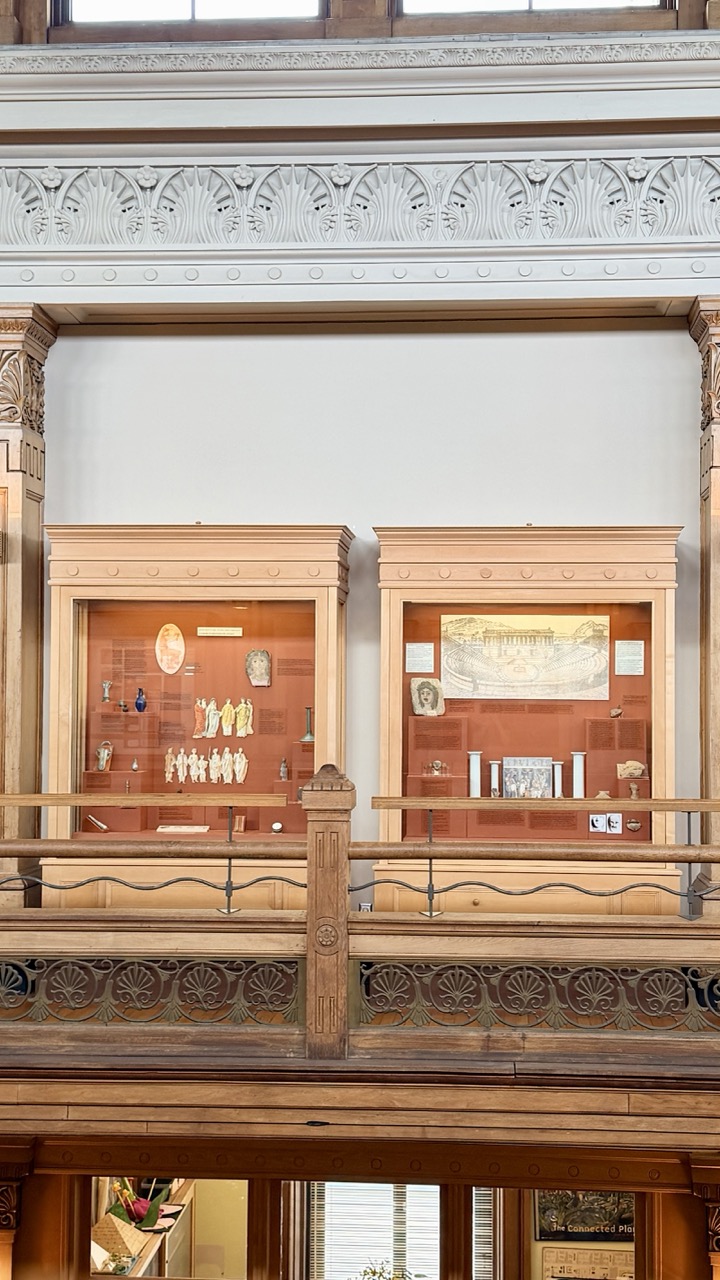
The information is there. Objects have labels detailing their provenance, material or context when these are known. But sometimes, the museum also states quite simply what it doesn’t know.
In front of a statue, for example, you might learn that the identity of the person represented is unknown. Another object may have an uncertain purpose. Elsewhere, the dating might remain approximate.
And I found that rather interesting.
In many museums, you can come away with the impression that every ancient object arrives with a perfectly reconstructed story: a date, a purpose, an owner and one definitive explanation. Here, some of the displays are a reminder that archaeology, anthropology and history also work with incomplete fragments.
There are still gaps.
Objects have travelled across centuries before reaching us, sometimes without precise documentation, sometimes after changing hands several times. And the museum doesn’t necessarily try to fill those gaps artificially. It simply says: this is what we know, and this is what we still don’t know.
That uncertainty sometimes makes the objects feel even stranger. You find yourself looking into a face carved several centuries ago, knowing that no one can say with certainty anymore who it was meant to represent.
Fossils and Skeletons That Completely Change Your Sense of Scale
In the main gallery, the palaeontology collections suddenly give the museum an entirely different sense of scale.
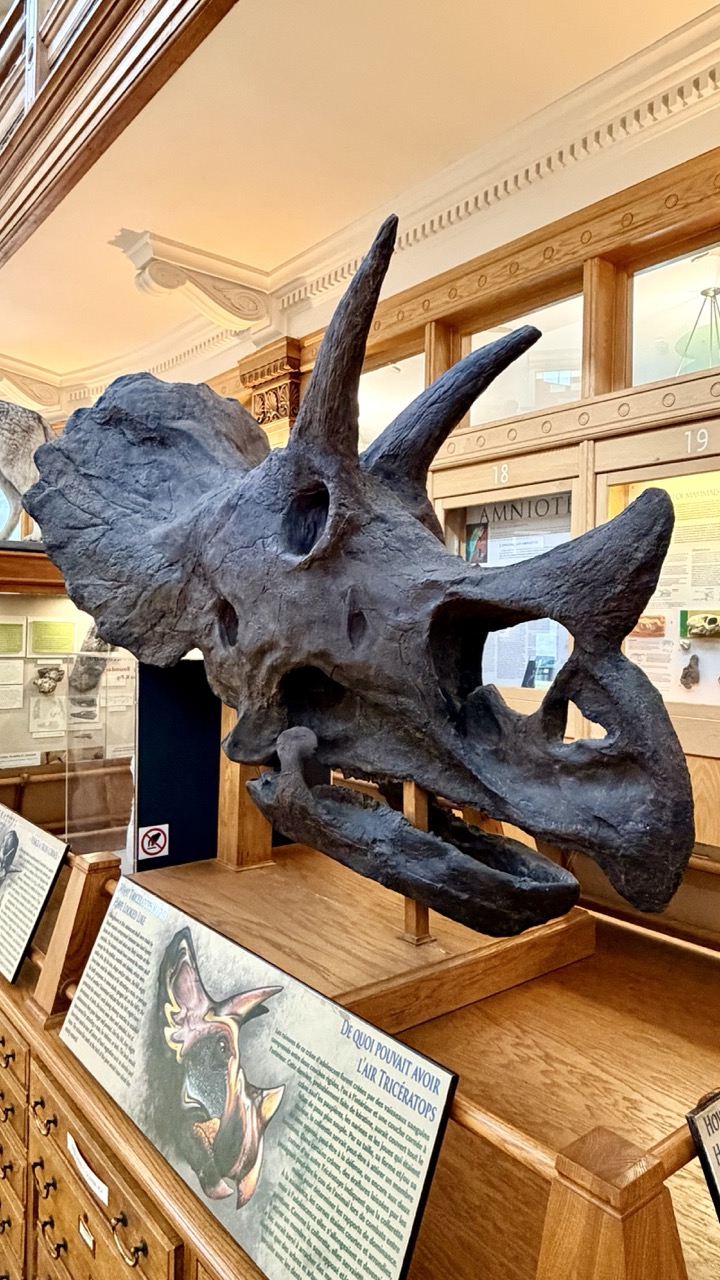
Display cases filled with fossils tell a story spanning hundreds of millions of years of evolution, while large skeletons occupy the central space.
Of course, these are the kinds of things whose dimensions we theoretically understand. We know an animal is big. We have read the measurements somewhere. We have seen photographs.
But standing in front of a skeleton is different.
You start looking at the size of the vertebrae, the length of a jaw, the thickness of a bone and, almost without meaning to, comparing everything with your own body.
That is especially true with whales.
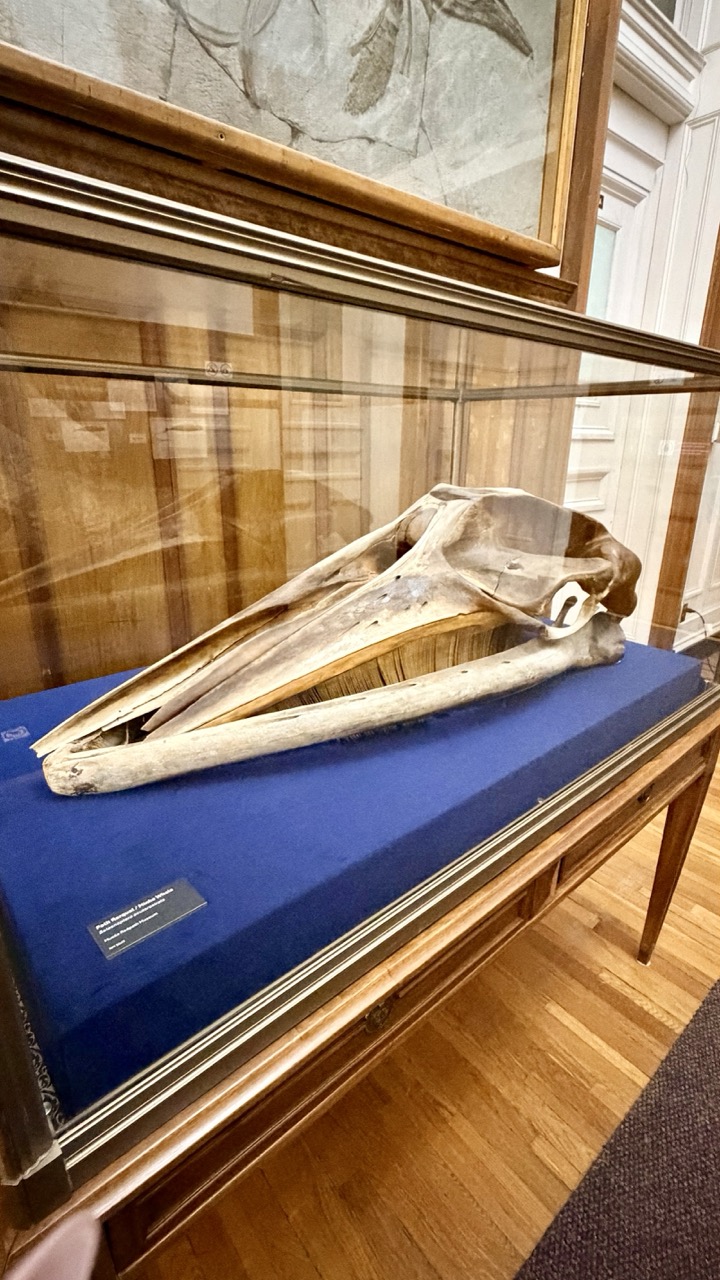
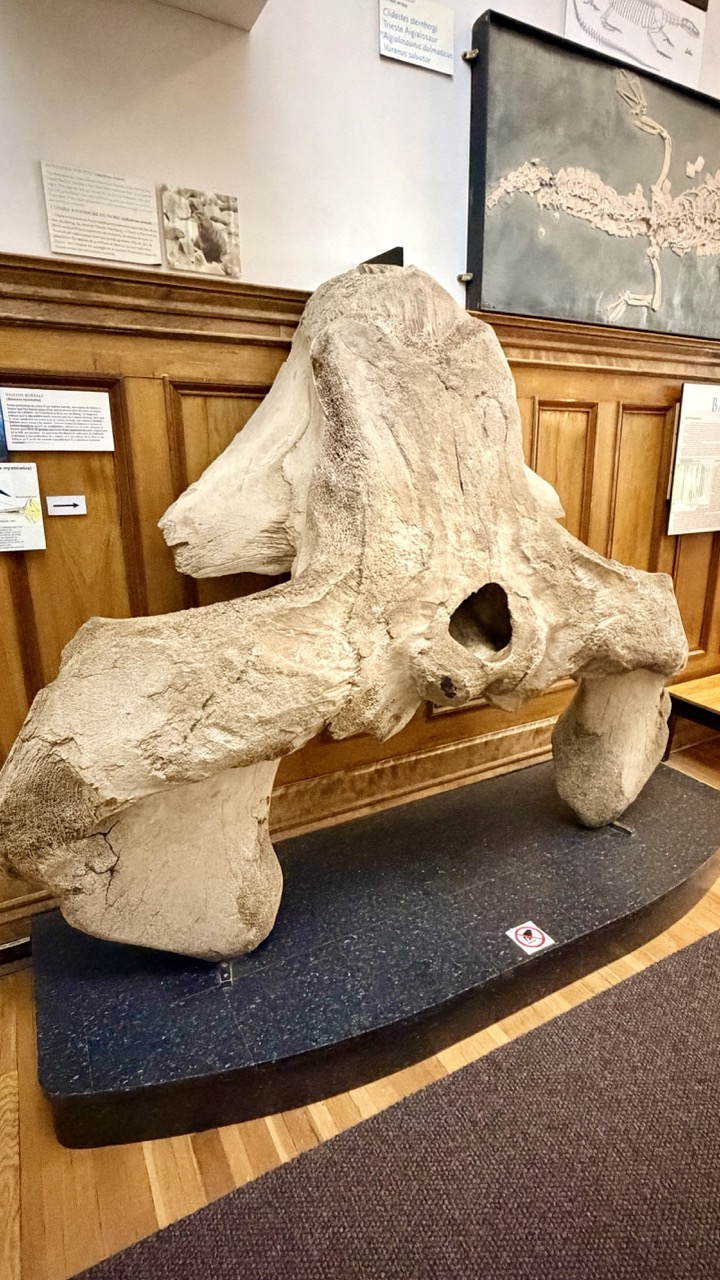
The museum displays the skeleton of a minke whale, among other specimens, but sometimes it is the fragments that impress me even more. Standing in front of this enormous rear section of a bowhead whale’s skull, for example, I struggle to reconcile what I am seeing with the fact that it is only a part of the animal.
It is enormous.
An adult bowhead whale can reach proportions that are difficult to grasp until you are standing in front of a piece of its skeleton. Suddenly, the sheer mass of its head becomes far more tangible.
And that feeling returns again and again throughout the museum.
The Second Floor: My Favourite Part
If I had to choose just one section of the Redpath, it would probably be the one devoted to zoology and biodiversity.
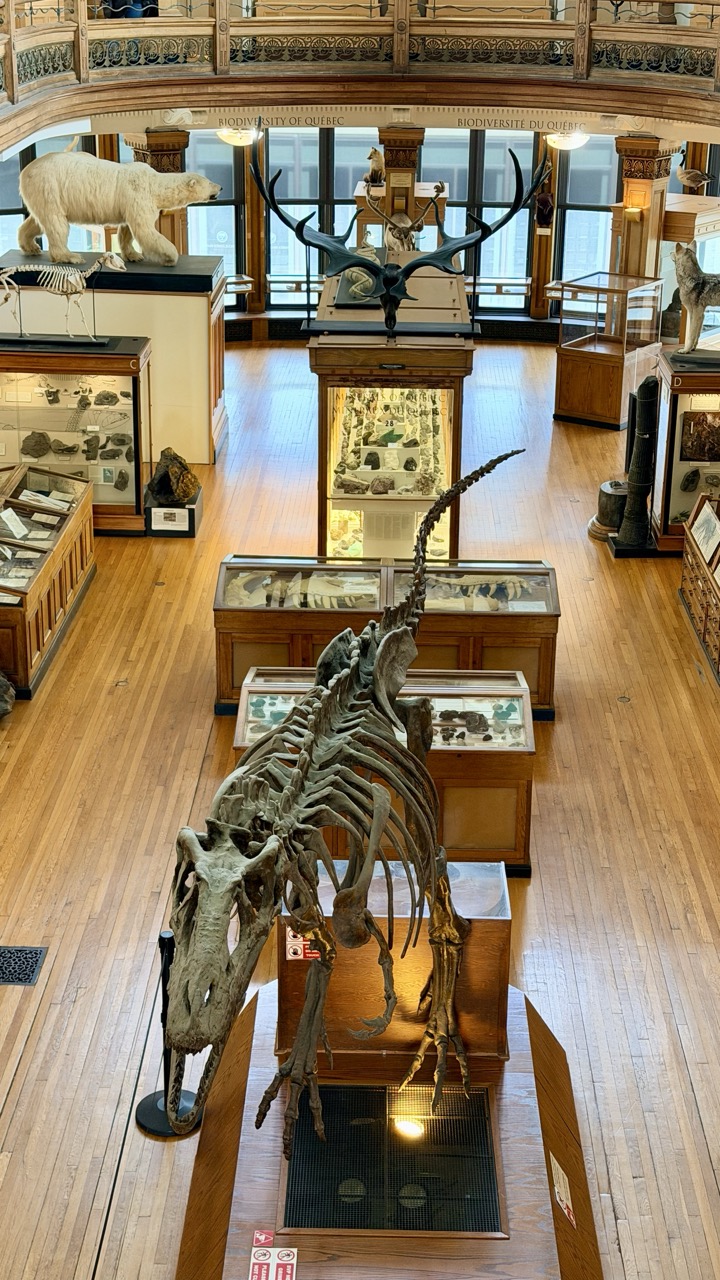
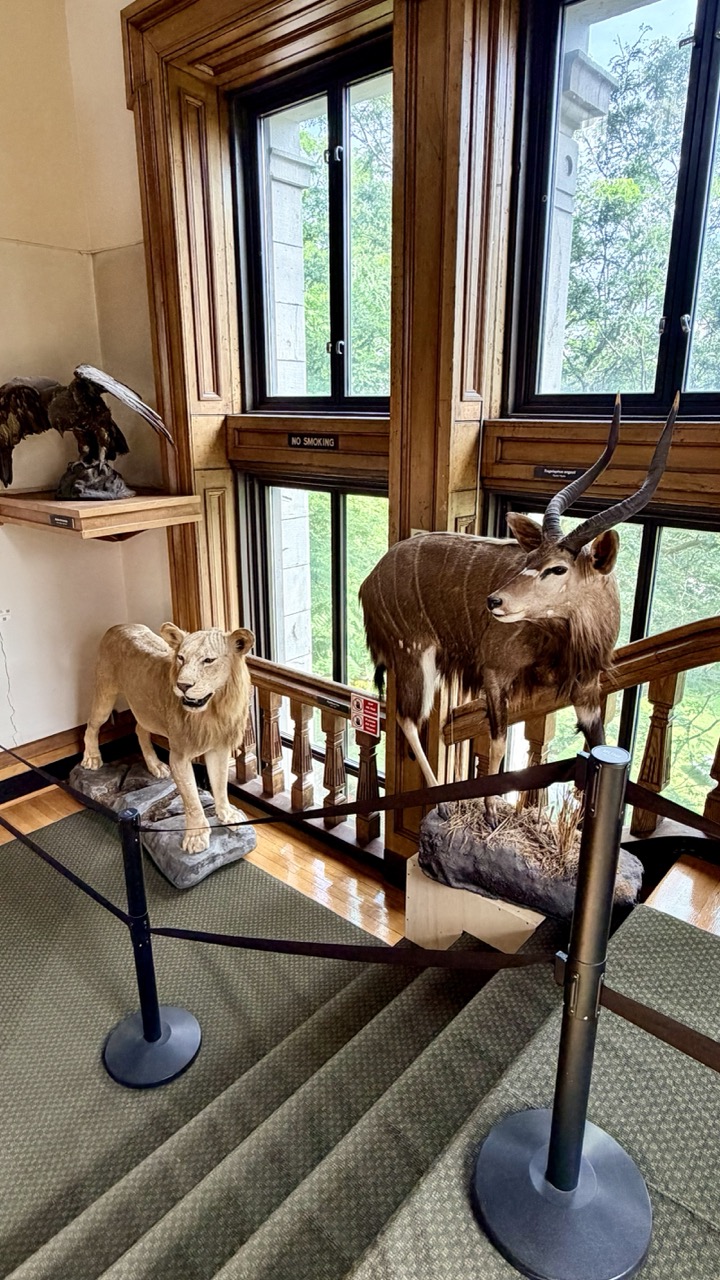
The gallery brings together taxidermied animals, skeletons, birds, mammals, shells and countless specimens that allow you to move, within a few metres, from Quebec wildlife to species found much farther afield.
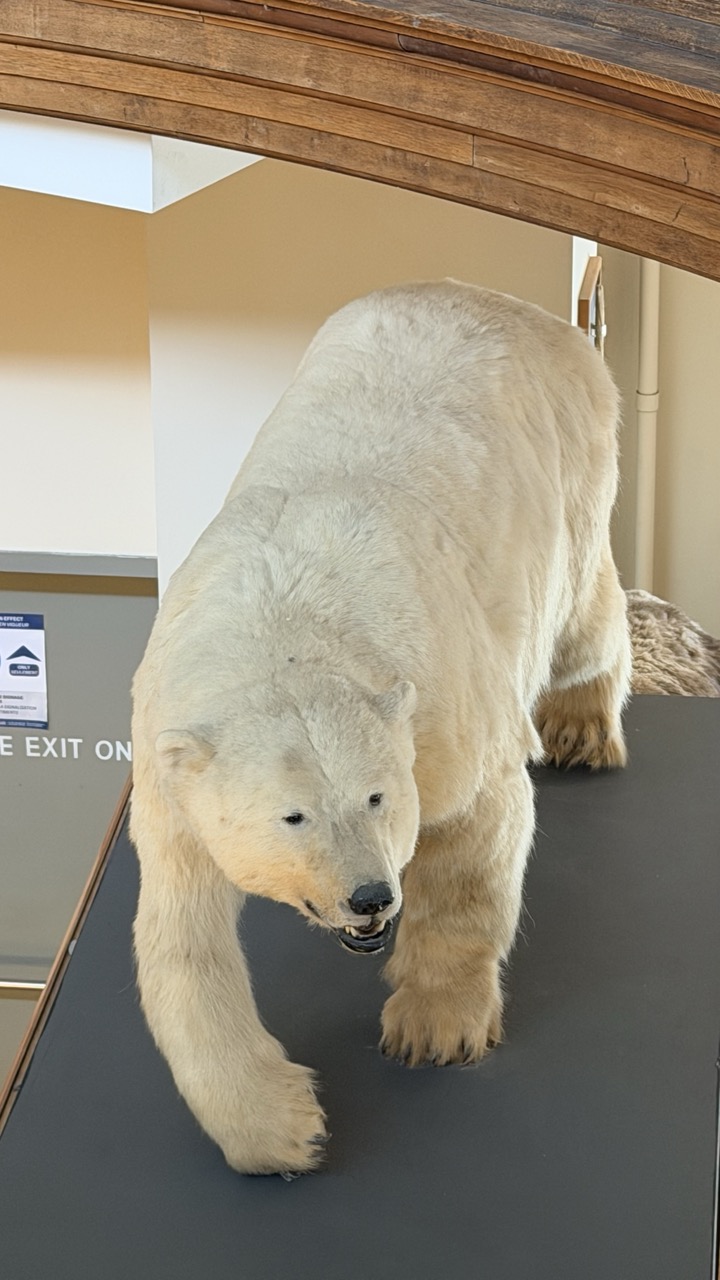
Several animals are particularly well adapted to the sometimes extreme conditions of Quebec and the Far North: polar bears, muskoxen, Arctic foxes, grey wolves, snowy owls and ptarmigans, among others.
And then there is the polar bear.
It is difficult to miss.
Up close, it isn’t only the size that strikes you. It is the enormous paws, the powerful neck, the density of the fur and the sheer sense of mass that photographs never quite manage to convey. Standing in front of it, the polar bear stops, for a moment, being that tiny white shape lost on an expanse of sea ice in a documentary.
You really understand the volume of the animal.
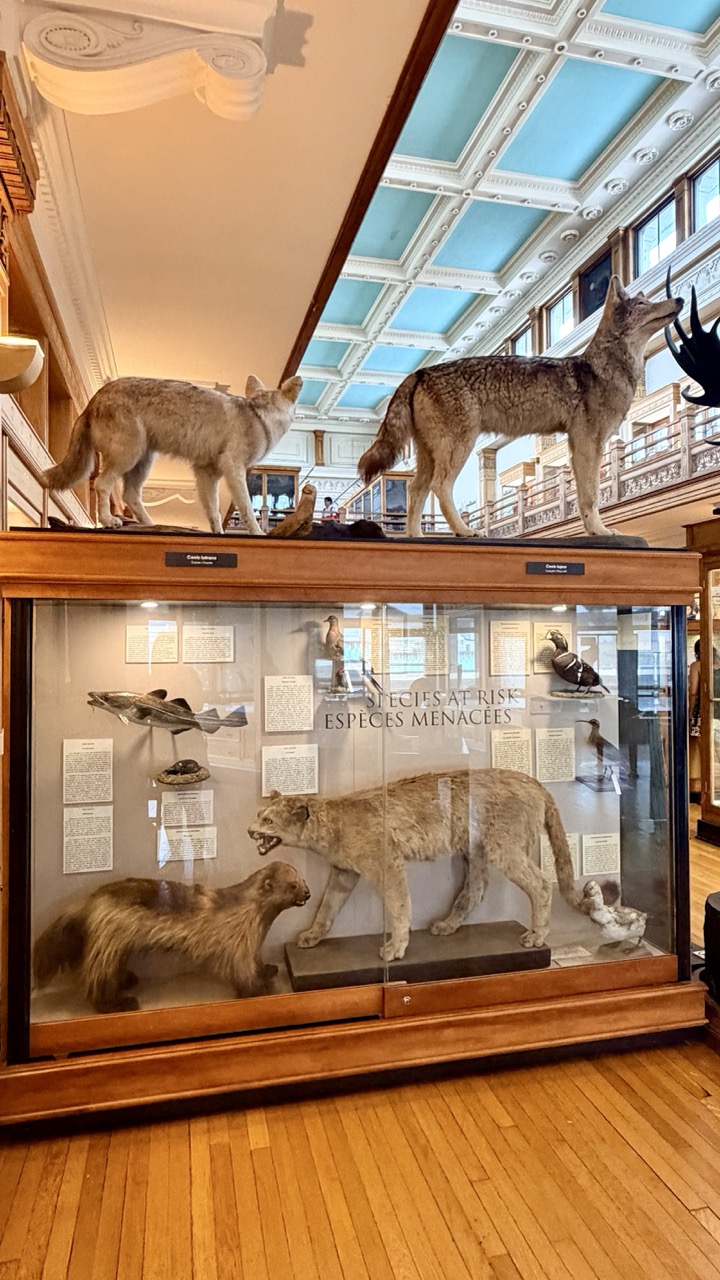
Farther along, other species tell less fortunate stories. The Redpath preserves several specimens of animals that are now extinct, which gives some of the display cases a rather different dimension.
Seeing an extinct animal produces a very different feeling from looking at an illustration with the word “extinct” written underneath it. This animal actually existed. Someone saw it alive. It belonged to a species that once inhabited the planet and that now exists nowhere at all.
On the Third Floor, You Enter a Completely Different World
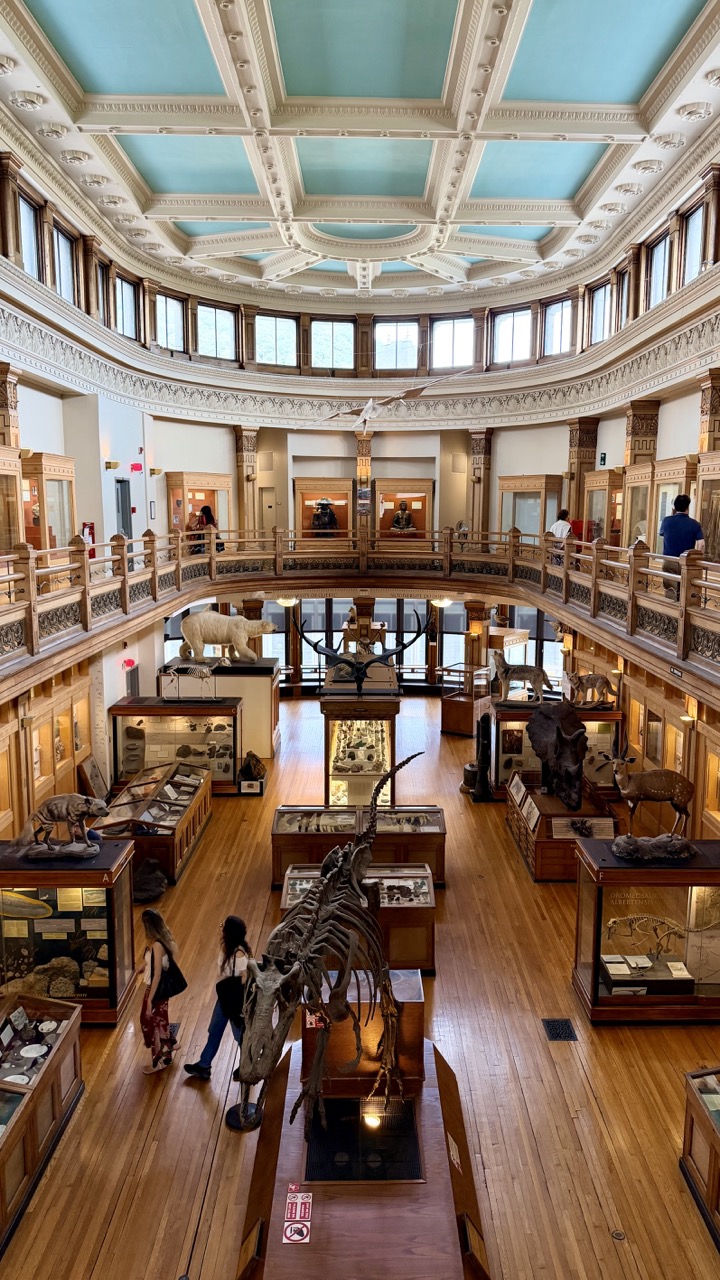
As you continue climbing the staircase, the view over the main gallery becomes increasingly beautiful. From the third-floor mezzanine, you can look down over the skeletons and display cases while enjoying what is probably one of the best views of the museum’s interior architecture.
But the collections also change completely.
Gradually, you leave natural history behind and enter the World Cultures Gallery.
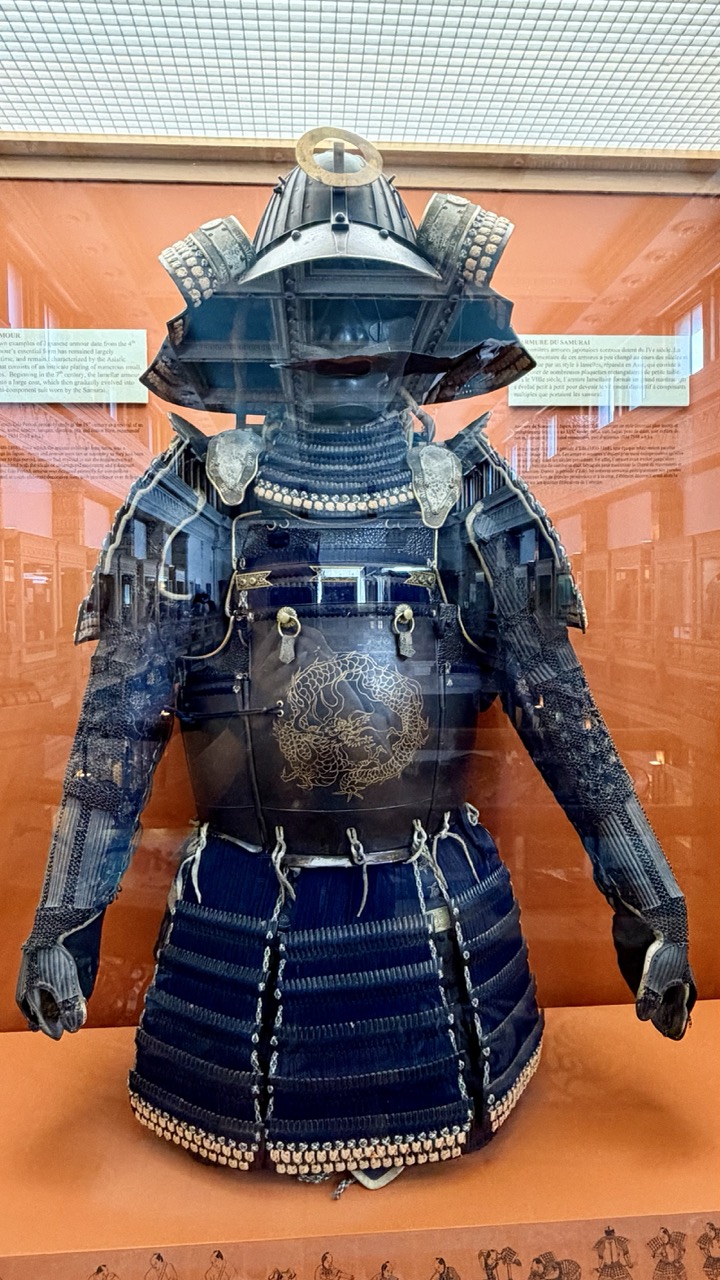
The display cases are filled with objects from Africa, Asia, the Middle East, the Mediterranean, Oceania and the Americas: domestic and ceremonial objects, ornaments, sculptures, instruments, coins, tools and archaeological pieces.
This is where I encountered most of those incomplete stories that had intrigued me earlier.
Sometimes, the museum knows exactly where an object came from and what it was used for. With others, the information becomes much more cautious: a particular statue probably represents a deity, but its exact identity remains uncertain; an object may have had a ritual purpose, though researchers cannot say so with confidence; another piece belongs to a certain historical period, but its precise date is unknown.
Far from making the visit less interesting, it mostly reminds you of everything that can disappear from around an object as it passes through time.
Its owner disappears.
The person who made it disappears.
Sometimes, even the language in which its purpose could once have been explained disappears too.
What remains is the material, the shape and a handful of clues that researchers try to piece together.
The Mummies That Are No Longer There
Another part of the third floor stopped me in my tracks, but this time precisely because of what is no longer on display.
The Redpath Museum once exhibited Egyptian human mummies. Today, they have been removed from the display cases.
In their place, a large panel explains the decision and invites visitors to think about the way human remains have long been exhibited in museums.
For decades, and in some cases for much longer, mummies were displayed to the public as archaeological objects alongside everything else. When you repeatedly see them inside glass cases, wrapped in bandages and accompanied by a date or historical period, it becomes almost easy to forget what they actually are.
Dead people.
Men or women who lived, had families, bodies and stories, and who were buried according to the customs of their time with the expectation that their remains would be protected.
The Redpath’s panel brings that reality back to the centre of the conversation.
As part of a broader reflection on the decolonization of museums and the ways Western institutions acquired, studied and displayed human remains, the museum has chosen to stop presenting these people as mere specimens.
I found that absence far more interesting than another display case would have been.
Because it forces you to look differently at what you come to see in a museum.
When we travel, we regularly enter institutions filled with objects from other cultures, other countries and other eras. We look at them through glass without always wondering how they got there, who owned them before, or even whether they were ever intended to be displayed.
With mummies, the question becomes even more direct, because we are no longer talking about objects at all.
We are talking about human bodies.
And the Redpath’s decision to deliberately leave that space empty ultimately serves as a reminder of something very simple: studying the past does not prevent us from respecting the people who were part of it.
What I Really Loved About the Redpath Museum
I wouldn’t say the Redpath Museum is Montreal’s most spectacular or most modern museum. In fact, saying so would miss exactly what makes it interesting.
It is small, its architecture clearly belongs to another era, and some of the collections retain that densely packed feel of old university museums.
But the Redpath has something else.
It has the atmosphere of a cabinet of curiosities, where you climb a wooden staircase and suddenly find a polar bear; where an enormous Japanese crab shares the museum with extinct animals, minerals, fossils and objects that travelled through several centuries before eventually arriving here.
There was also something I particularly liked about the museum’s willingness to show the limits of what we know. Not every story from the past is complete.
Sometimes, all that remains is a statue whose face can no longer be identified. An object whose purpose has been lost. A fragment of bone that gives you a dizzying sense of just how large an animal could become.
And sometimes, what matters most is no longer what a museum chooses to display, but what it chooses not to display anymore.
Perhaps that is what I will remember most about the Redpath: the feeling of constantly moving from curiosity to the next question.
Who made this? What was this object used for? How can an animal possibly grow that large? And what should a museum choose to display today when it has inherited collections assembled more than a century ago?
In the end, this small museum tucked away in the middle of McGill says as much about the way we look at the past as it does about the past itself.
And to discover all of it, you simply have to open a door in the middle of the university.
Practical Information for Visiting the Redpath Museum
The Redpath Museum is located at 859 Sherbrooke Street West, on McGill University’s downtown campus.
Admission: entry is by voluntary contribution, so you can adjust your donation according to your budget. If you can afford it, contributing financially is a simple way to help support the museum and care for its collections.
How long to allow: I would plan around 1½ to 2 hours if you want enough time to explore all three levels without rushing.
Good to know: the building dates from the 19th century and retains its historic architecture, including the large central staircase connecting the different levels.
My tip: don’t come only for the museum. Take some time before or after your visit to walk around the McGill campus. The historic buildings, lawns and trees are genuinely worth exploring, especially when you remember that you are still right in the heart of downtown Montreal.