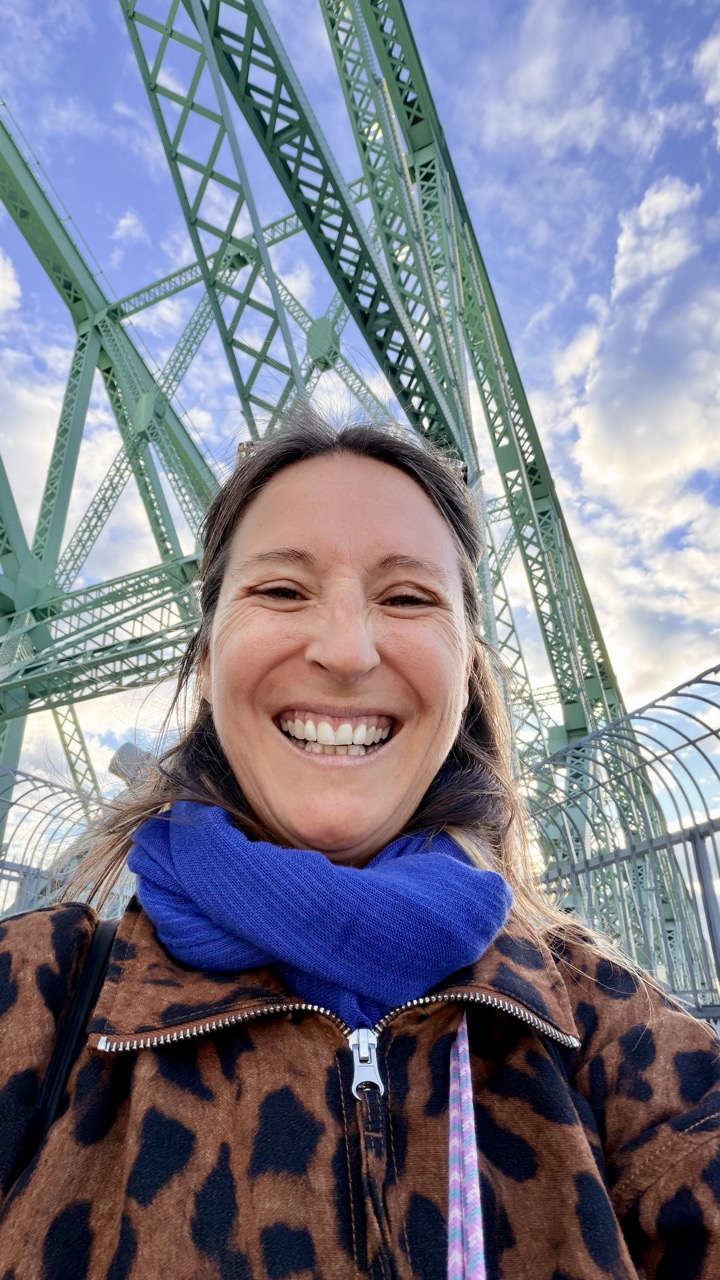
t’s barely 7:30 a.m. when I cycle onto Jacques Cartier Bridge.
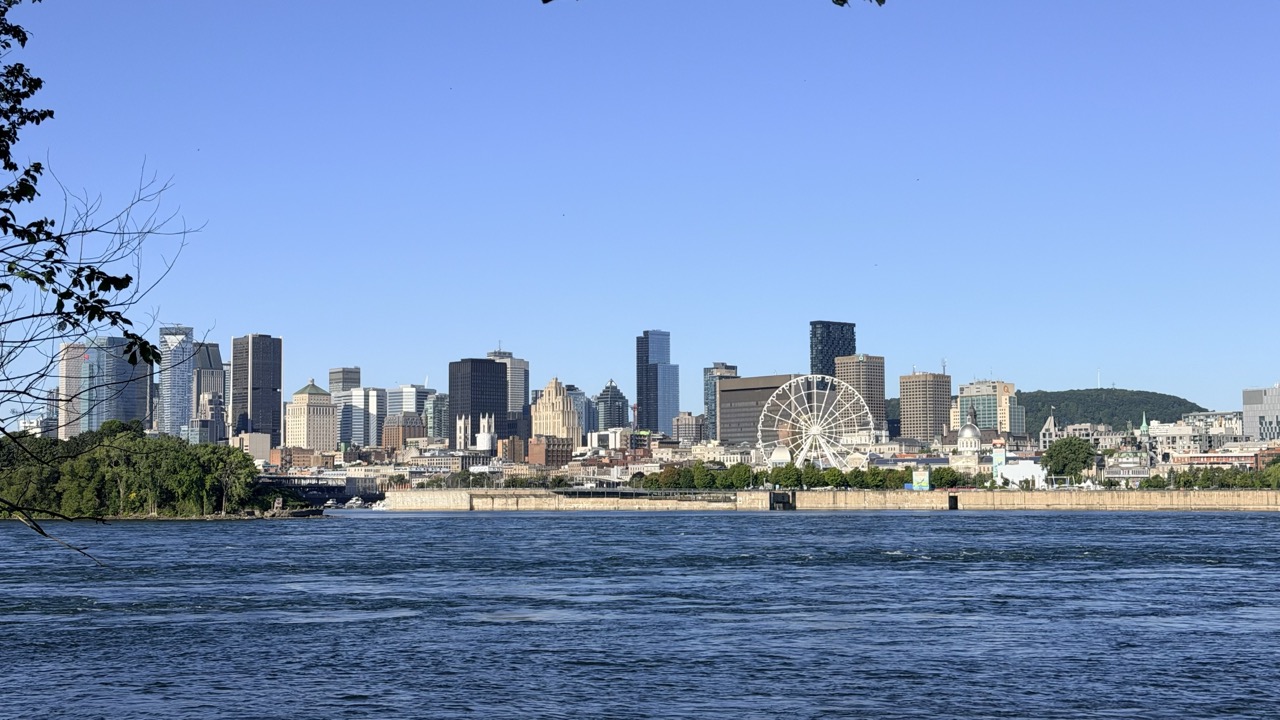
At this hour, Montreal hasn’t quite settled into its usual rhythm yet. Traffic is still reasonable, the morning air is cool and, as I pedal above the St. Lawrence River, the city gradually unfolds behind me. From up here, the river looks immense. Water frames Montreal on either side, while straight ahead, a mass of trees slowly comes into view in the middle of the river.
That’s where I’ll be spending my morning.
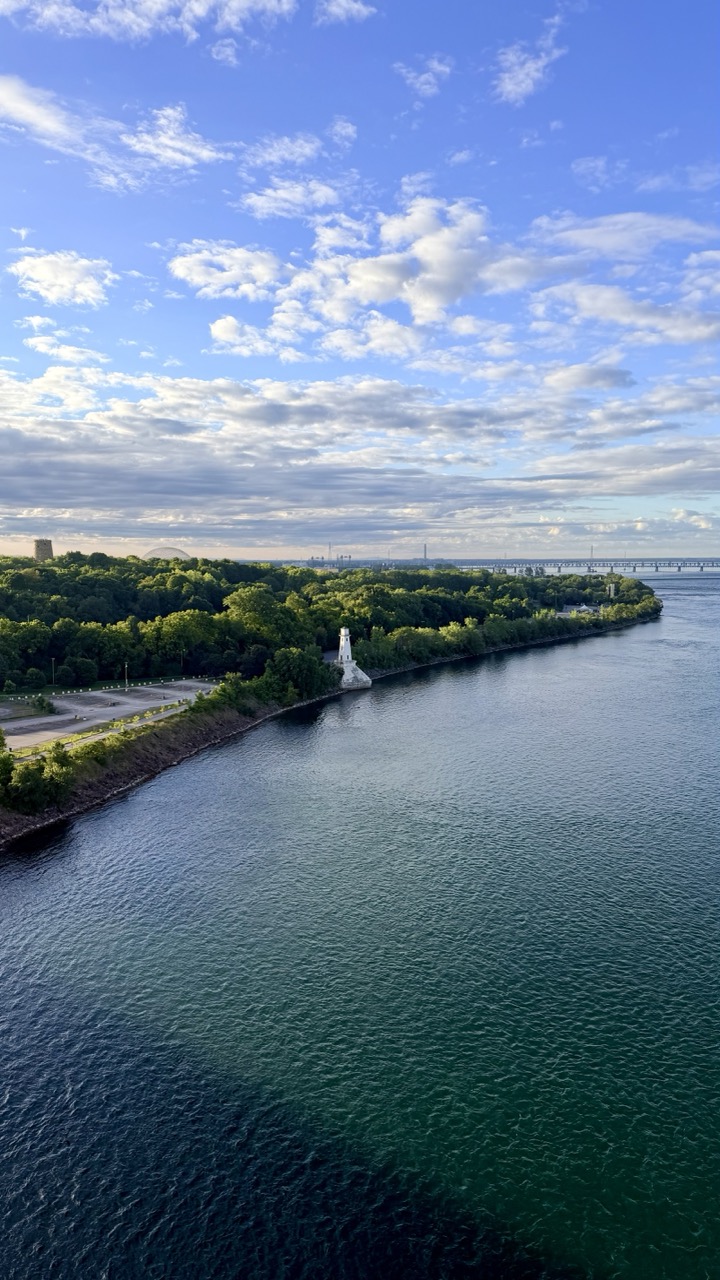
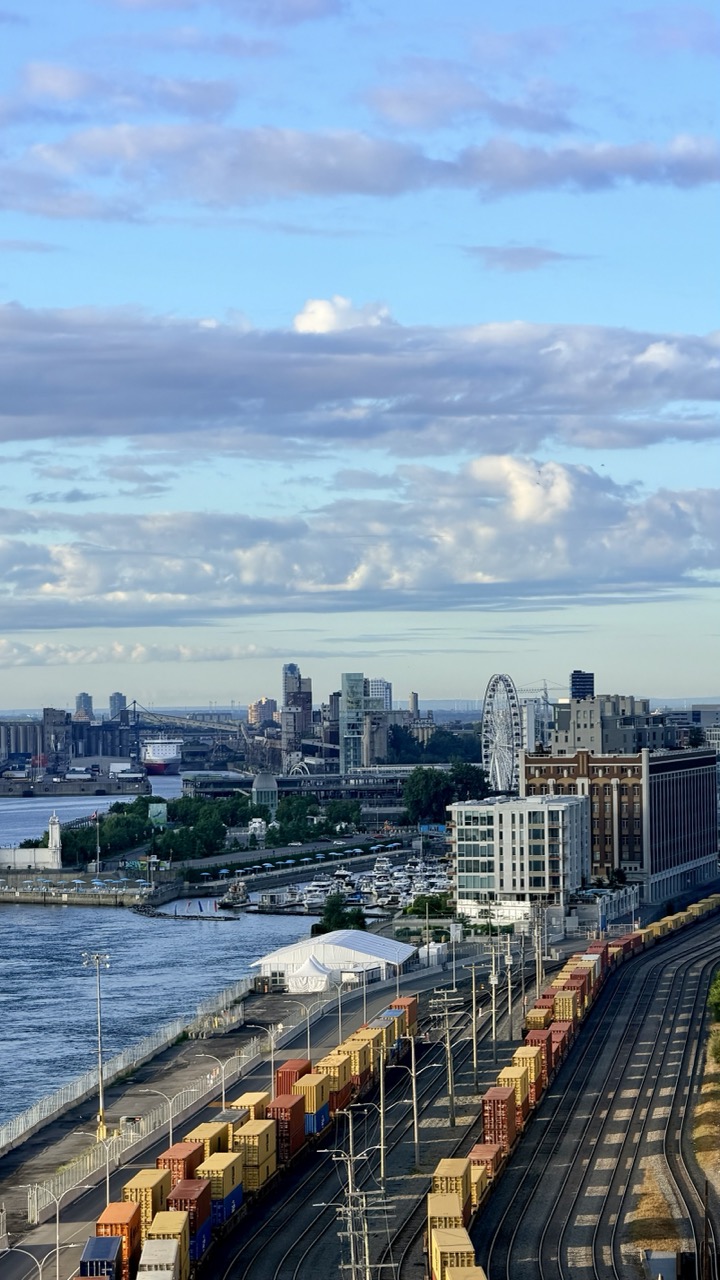
My plan is fairly simple: explore Sainte-Hélène and Notre-Dame islands, two islands in Parc Jean-Drapeau that you can see constantly from Montreal without necessarily taking the time to find out what is actually hidden there.
And, as it turns out, quite a lot is hidden there.
British military remains, monumental works of art, traces of Expo 67, a strange metal sphere that has become one of Montreal’s symbols, almost-secret gardens and even a Formula 1 circuit.
All of it concentrated on two islands that are easy to explore by bike and on foot.
Cycling across Jacques Cartier Bridge
I set off on a BIXI bike, which is quickly going to turn the entire morning into a kind of logistical game.
With a regular bike and a membership, the first 45 minutes are included. So my system is to keep an eye out for docking stations, return my bike before my time runs out, then pick up another whenever I need one. Over the course of the morning, I’ll end up switching BIXIs several times, alternating stretches of cycling with long walks.
Getting to the islands from Montreal via Jacques Cartier Bridge is already a little adventure in itself.
The bike path climbs gently above the river and, the higher you go, the more it reveals a completely different perspective over Montreal. Then comes the descent onto Sainte-Hélène Island, near La Ronde.
I find a BIXI station, dock my bike and continue on foot.
At 7:30 in the morning, the contrast with Montreal is striking.
The park is practically empty.
No groups, no families, hardly another walker in sight. Just birds calling in the trees, the sound of my footsteps along the paths and, every now and then, something rustling in the leaves.
It doesn’t take me long to realise that I’m not exactly alone, though.
The groundhogs are already up
The first animals I come across are groundhogs.
They appear along the edges of the paths with that slightly lumbering shape that somehow makes them instantly endearing. Some stand perfectly still in the grass before vanishing the second I get a little too close. Others seem far less concerned by my presence and simply carry on with their morning.
The squirrels, meanwhile, are everywhere.
There are also tiny striped creatures darting between roots and leaves before I even have time to get a proper look at them: eastern chipmunks, the squirrels’ smaller cousins that are a common sight in Quebec’s wooded areas.
At this hour, I almost feel as though the park belongs to them. And in some ways, it probably does. The humans will arrive later.
I keep walking deeper into the island, where the lawns and broad paths gradually give way to trees.

Into the woods in search of the Lévis Tower
My next objective is the Lévis Tower.
I already know I’m far too early to visit it. The tower doesn’t open until 10 a.m., and I have absolutely no intention of waiting around until then. What I really want is simply to find it.
The path gradually disappears into the woods of Mount Boullé.
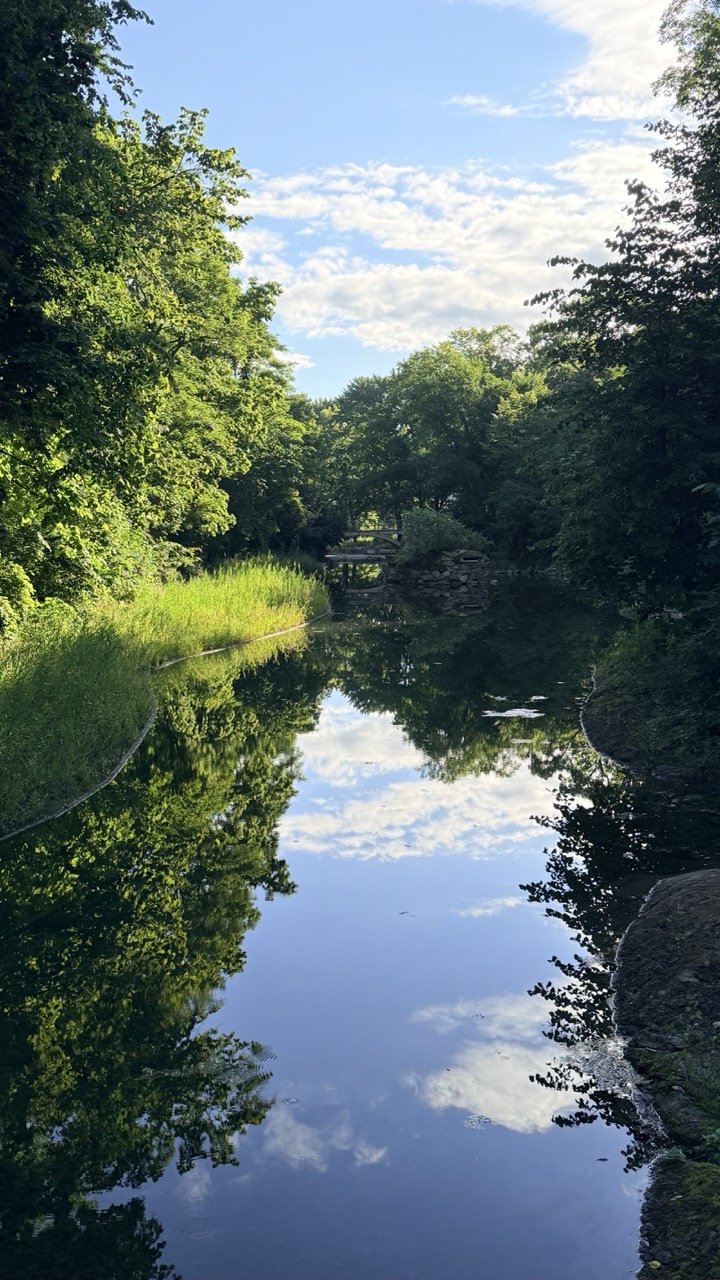
The light changes immediately. Beneath the trees, the morning sun only filters through in small patches between the leaves. The ground is scattered with branches, roots and dry leaves, and the sounds of the city almost completely disappear.
In their place come all the little noises of the forest.
A rustle in the leaves to my right.
A few seconds later, another one behind me.
Then a branch snapping somewhere among the trees.
I know perfectly well that it is probably a squirrel, a chipmunk or a bird. After all, that’s pretty much all I’ve seen since I arrived.
But naturally, my brain decides that every single sound could potentially belong to something much larger than it really does. A cougar, perhaps? 🤣
I keep going anyway, torn between laughing at myself and regularly checking whatever has just moved in the bushes this time.
Then, between two tree trunks, something appears.
First, a few stones behind the leaves.
Then part of a building.
And finally, the whole tower.
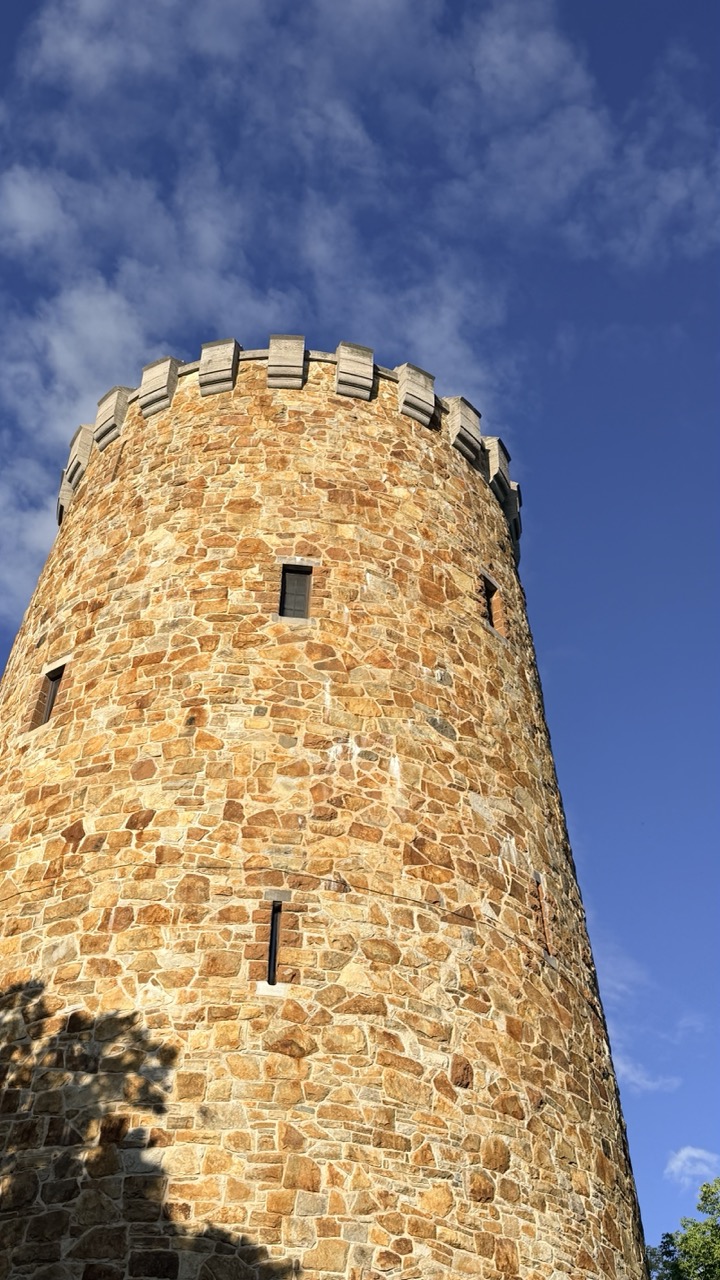
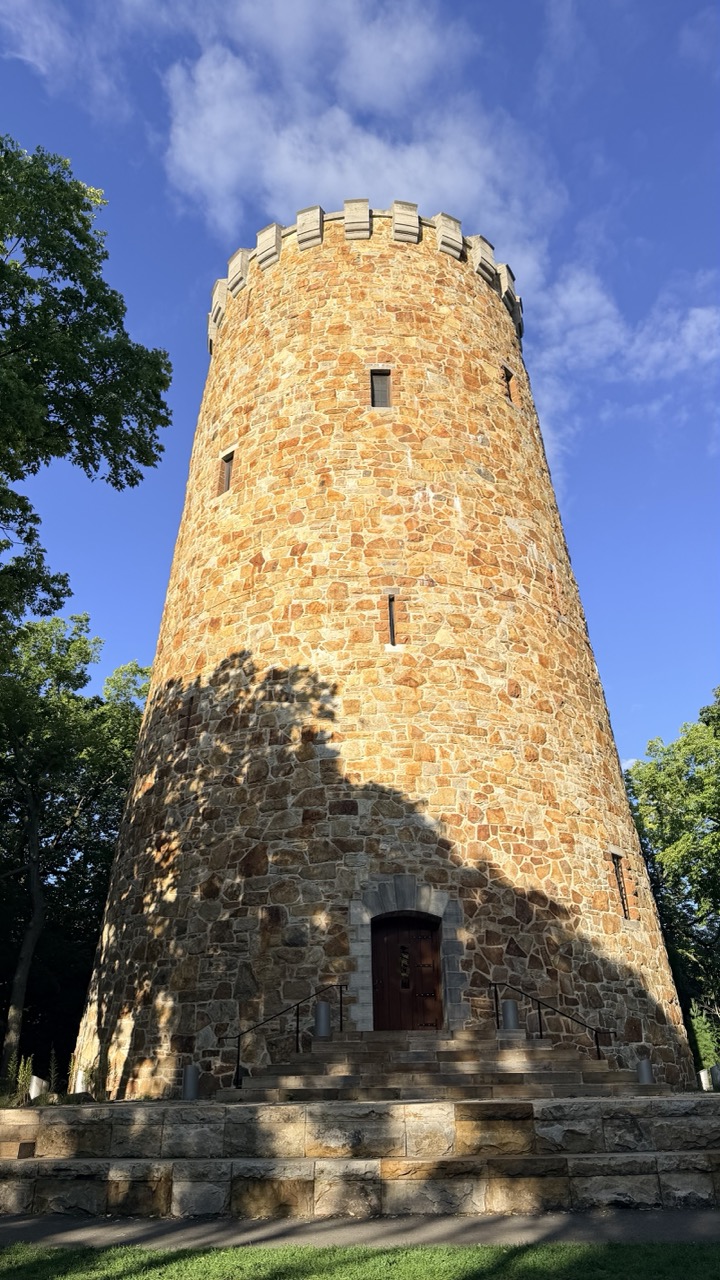
The Lévis Tower stands at the top of Mount Boullé, massive and almost hidden by the vegetation. Built in 1937, it wasn’t originally intended simply as a lookout tower: it concealed a water reservoir. Its masonry was made in part from a reddish-brown stone known as breccia, quarried directly on Sainte-Hélène Island. Today, when the tower is open, its 157 steps lead to a terrace with a 360-degree view over Montreal, the river and the islands.
I linger around the building for a while before heading back down the path.
An island much older than the park
As I walk, I begin to realise that Sainte-Hélène Island is far more than just a large green space sitting opposite Montreal.
Its history is everywhere.
Long before Europeans arrived, the island was already visited by the St. Lawrence Iroquoians. In 1611, Samuel de Champlain named it Sainte-Hélène in honour of his wife, Hélène Boullé. It later passed into the hands of the Le Moyne family before taking on a much more military role under British rule.
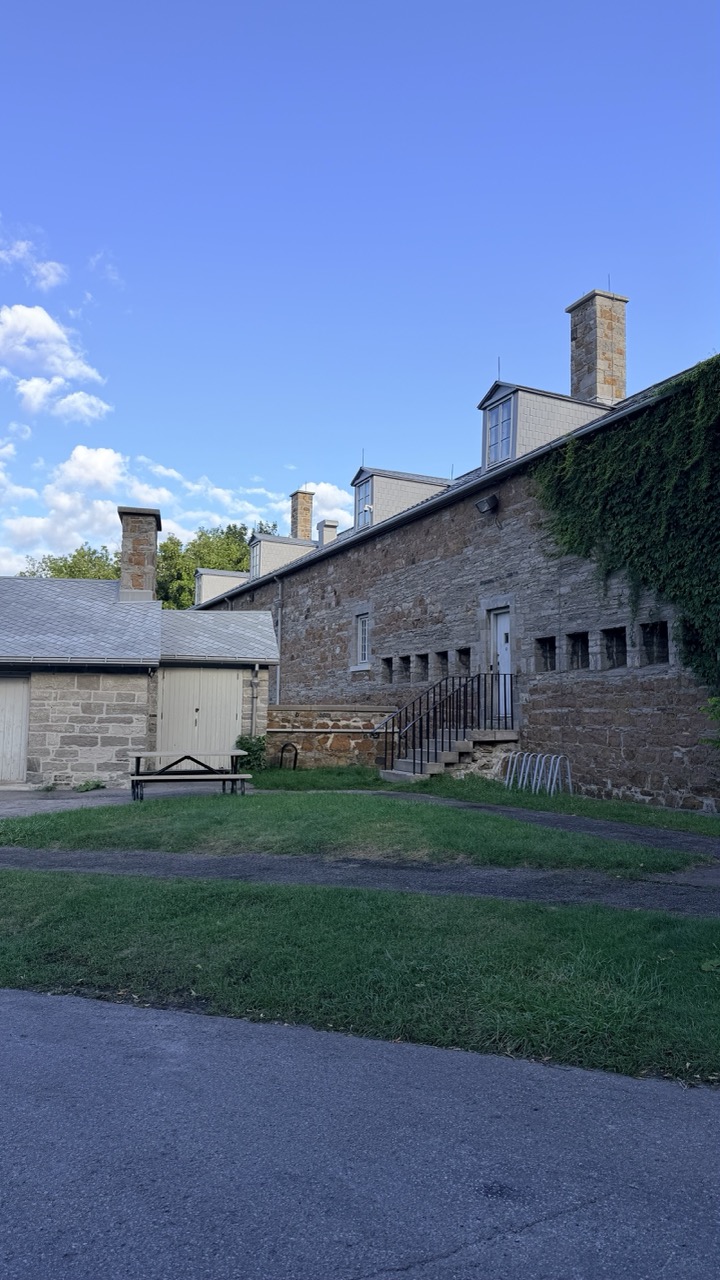
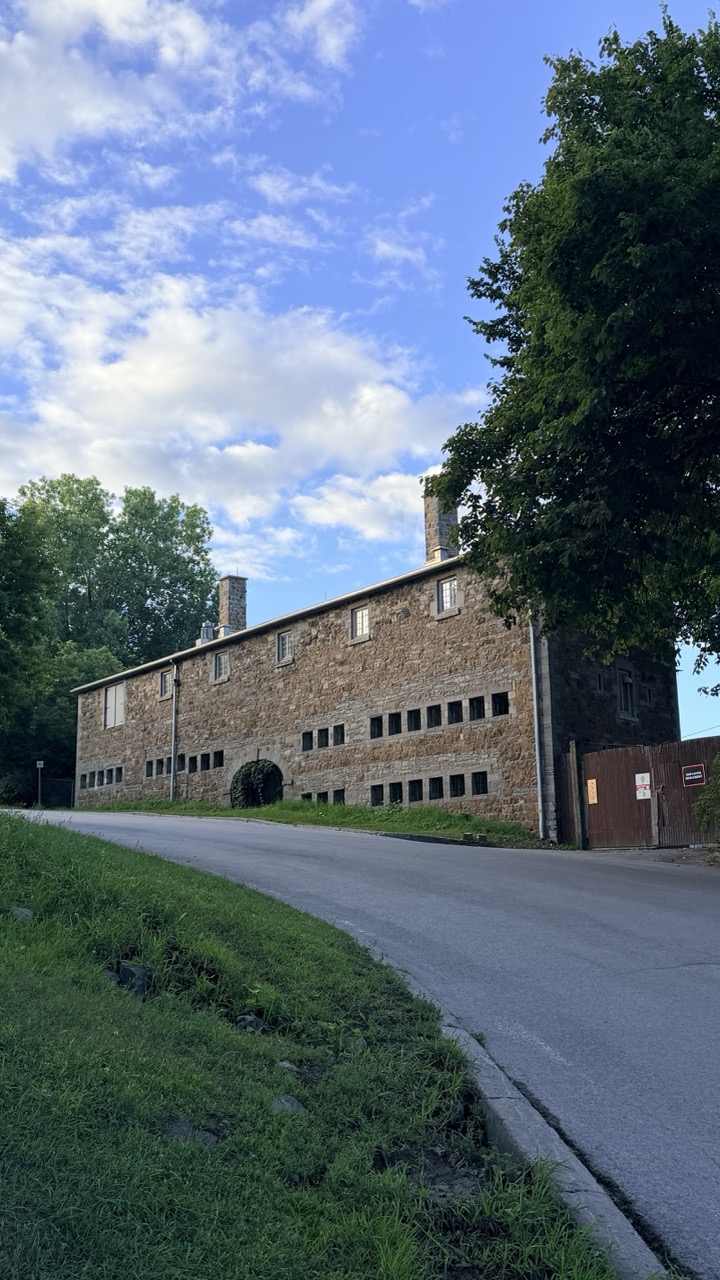
And I soon arrive in front of one of the most imposing remnants of that period: the Fort on Sainte-Hélène Island. The gates are closed when I pass by, so I can only see it from the outside.
Behind those stone walls, however, lies an important chapter of Montreal’s history. After the War of 1812 against the United States, the British sought to strengthen the colony’s defences. They purchased the island in 1818 and, between 1820 and 1824, built a military complex including an arsenal, powder magazine, armoury and barracks capable of housing up to 274 soldiers.
Two centuries later, everything is silent.
The walls are still standing, but the soldiers have been replaced by groundhogs casually wandering across the lawns.
I rather like that image.
The lighthouse and Montreal across the river
I continue towards the riverbank and the Sainte-Hélène Island Lighthouse.
In several places, the trees suddenly open onto the St. Lawrence. After the shaded trails through the centre of the island, stepping back into all that light almost feels like emerging from a tunnel.
And directly opposite me is Montreal.
From the island, the city somehow feels both very close and surprisingly far away. Downtown’s buildings form a vertical line beyond the water, individual towers rising one beside another while the river fills the entire foreground.
I stop at several viewpoints, including the Jean Drapeau Viewpoint, simply to look.
It’s one of the things I love most about this walk: technically, I’m still in Montreal, only a few minutes from downtown, yet the river creates enough separation to make me feel as though I’ve left the city behind.
A strange granite city in the middle of the park
Back on the paths, I come across La Ville imaginaire.
It’s impossible to walk past without noticing it.
Enormous blocks of white granite rise above the park, assembled like fragments of an architectural structure with part of it missing. From a distance, the whole thing could almost be a monumental gateway or the strikingly geometric ruins of some unknown civilisation.
The artwork stands nineteen metres high.
It was created in 1997 by Portuguese artist João Charters de Almeida and gifted to Montreal to mark the thirtieth anniversary of the Metro and Expo 67. Here, the artist explores ideas of passageways, gateways and the imaginary spaces human beings have been inventing since the beginning of time.
I walk around it for a few minutes.
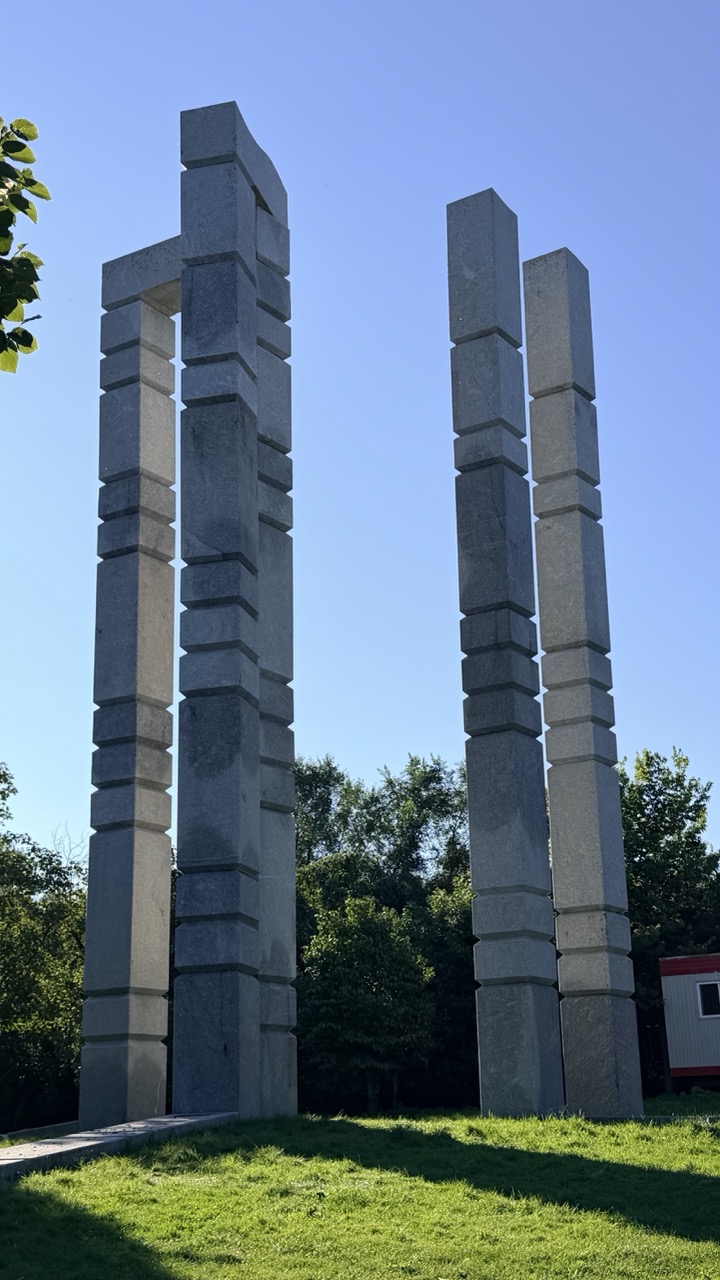
At this early hour, nobody interrupts the view. There are only these immense pale blocks, the grass still damp from the morning and the trees behind them.
Then another sculpture appears farther ahead.
And this one belongs to a completely different era.
Three Disks, a monumental reminder of Expo 67
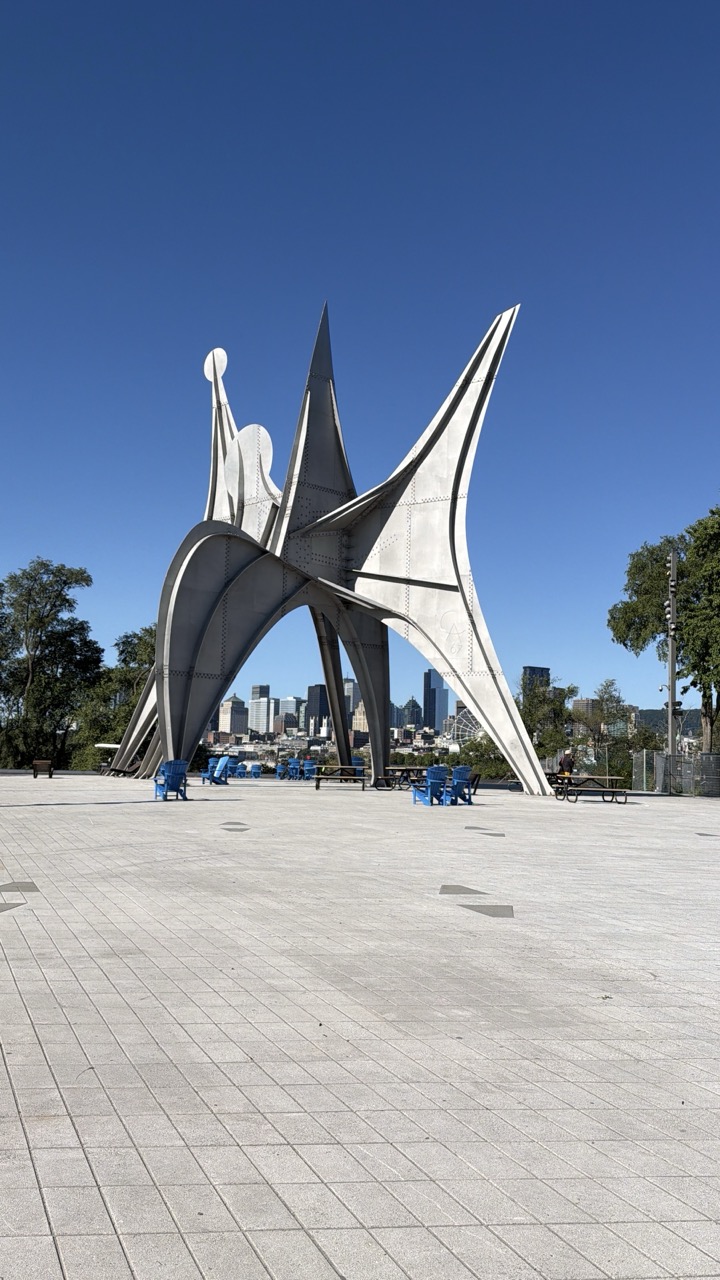
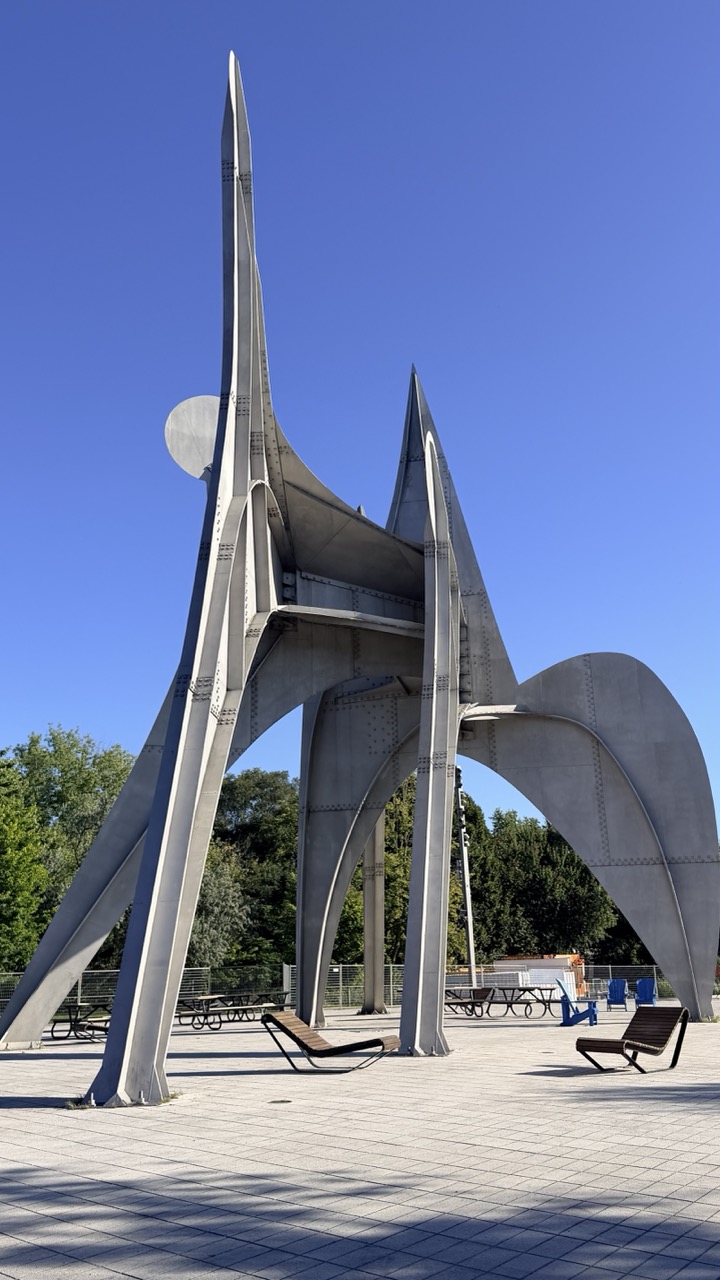
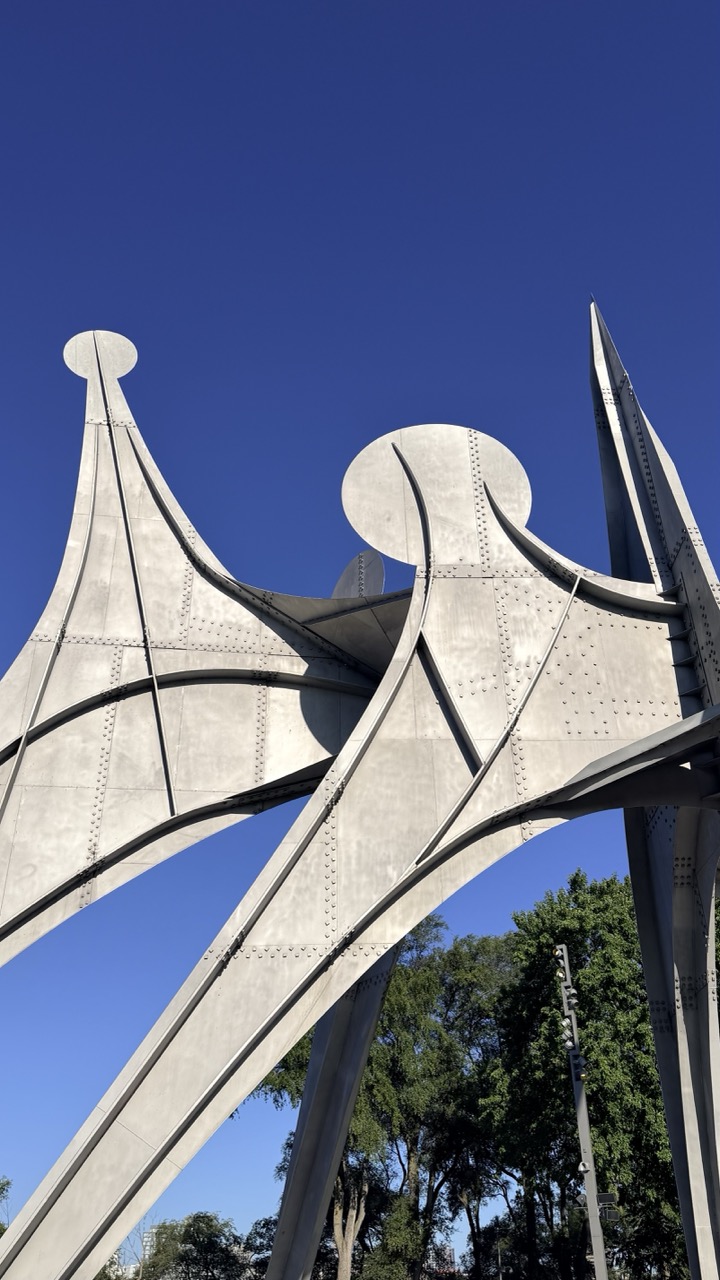
Alexander Calder’s Three Disks makes absolutely no attempt to blend into the landscape. I know it well: you inevitably see it whenever you go to weekend events like Piknic Électronik or ÎleSoniq.
If anything, the enormous metal structure seems to have been placed here precisely to command the entire space around it.
Its huge steel plates intersect and rise towards the sky in a balance that seems almost impossible. Depending on where you stand, the sculpture completely changes shape: sometimes dense and imposing, sometimes surprisingly light as the sky appears through the spaces between the metal elements.
Calder created it for Expo 67, the event that profoundly transformed these islands.
Because much of the landscape I’m crossing today is connected to that world exhibition.
In 1967, Montreal welcomed more than 50 million visitors to an Expo built around the theme Man and His World. Sixty-two countries took part. For several months, these islands became a kind of global architectural laboratory, with each nation presenting its own vision of the future.
More than half a century later, a few traces remain.
And the most spectacular one is waiting for me just a few minutes farther on.
The Biosphère, Expo 67’s metal skeleton
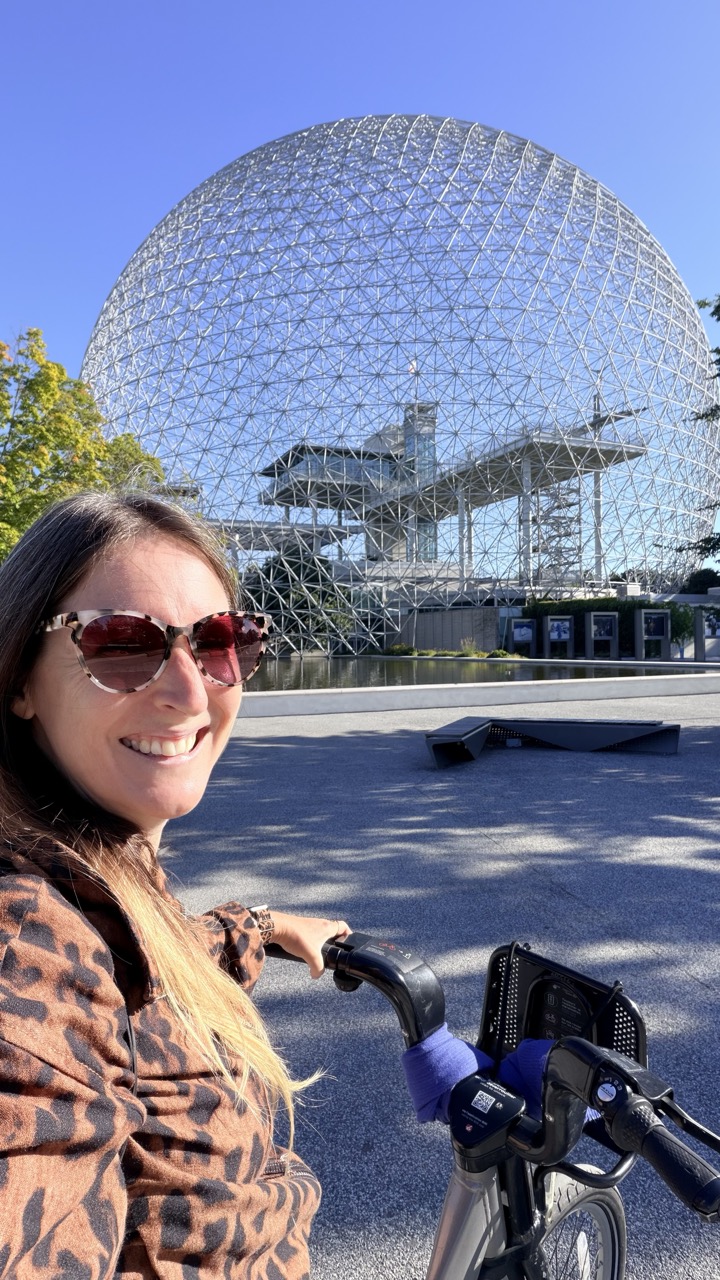
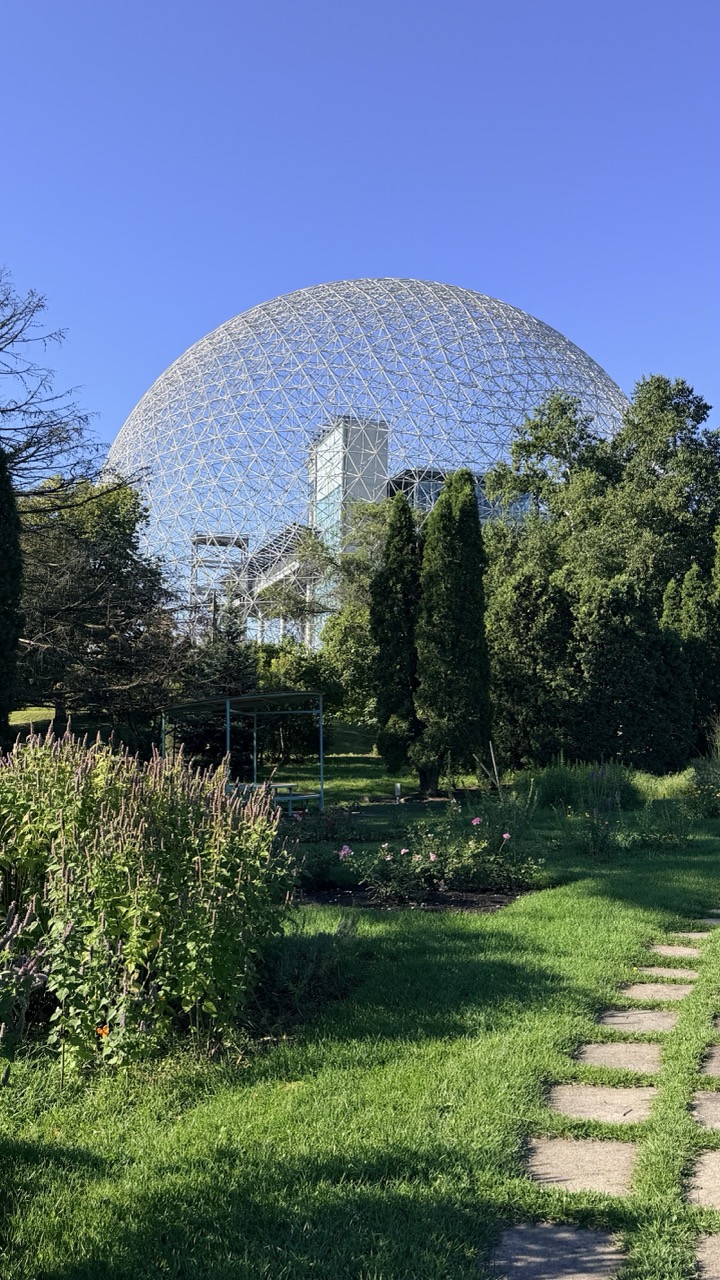
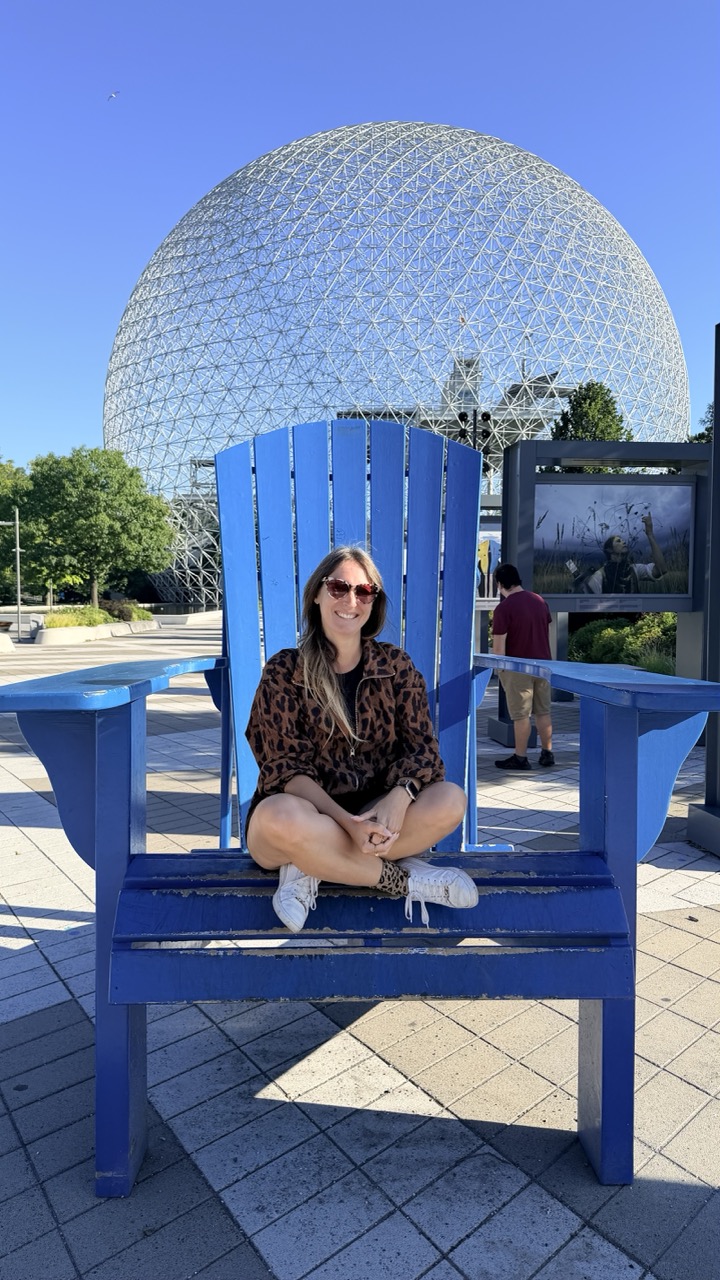
You can see it long before you reach it. An enormous metal sphere rises behind the trees.
The Biosphère.
Even though I’ve seen it countless times from Montreal, it feels far more impressive when it suddenly fills my entire field of vision.
Hundreds of steel tubes create a succession of triangles that together form an almost perfect sphere. Depending on the angle, the sky shines straight through the structure, making it seem almost weightless.
Originally, this was the United States pavilion for Expo 67.
American architect Richard Buckminster Fuller designed the vast geodesic dome as a structure capable of enclosing an enormous volume using relatively little material. After the exhibition, the pavilion was gifted to Montreal and later became the Biosphère, which today is dedicated to environmental issues.
I decide not to go inside.
The exhibitions don’t particularly appeal to me anyway, and what really interests me is right here in front of me: this completely improbable piece of architecture standing among the trees.
I’d rather stay outside.
The Rose Garden before changing islands
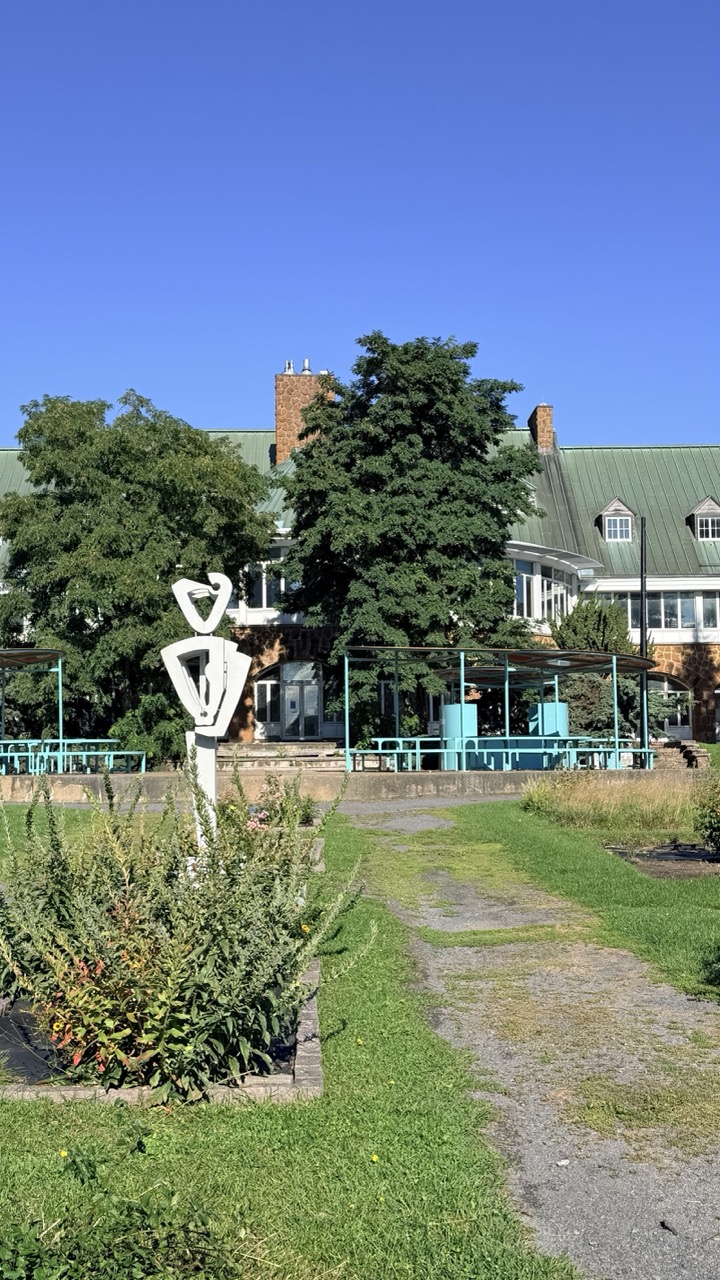
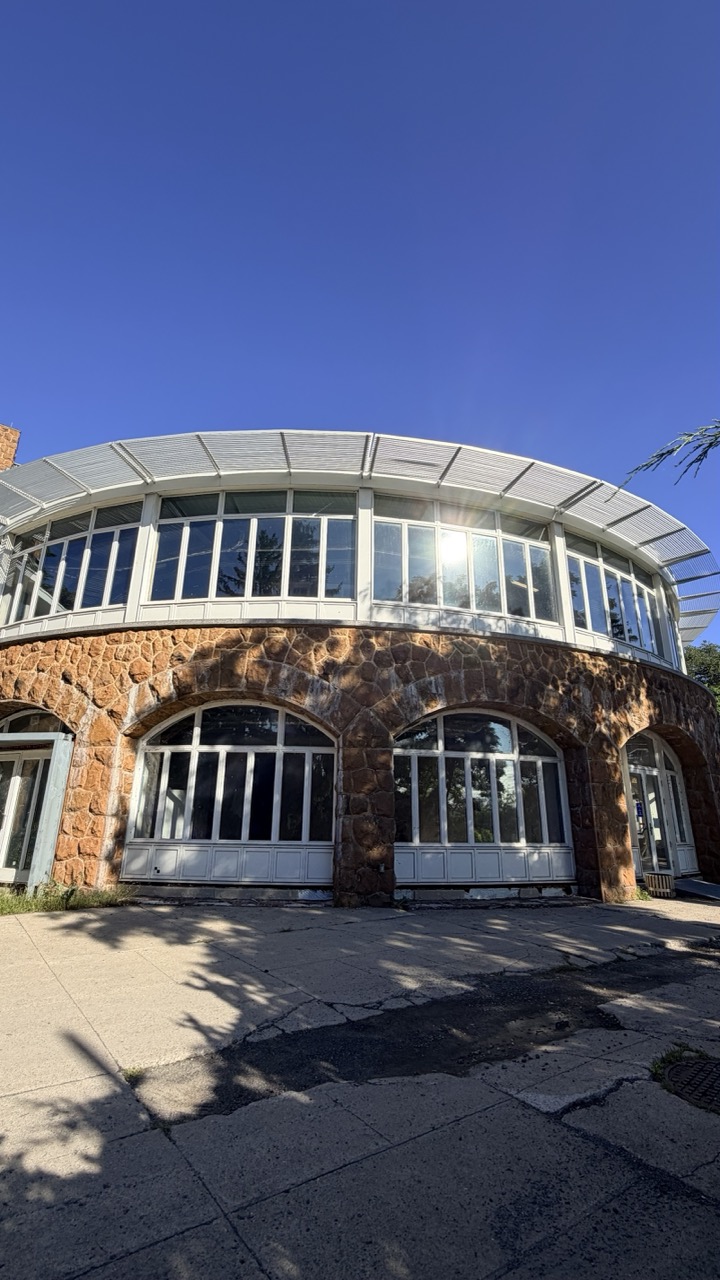
Next, I pass through the Espace Roseraie.
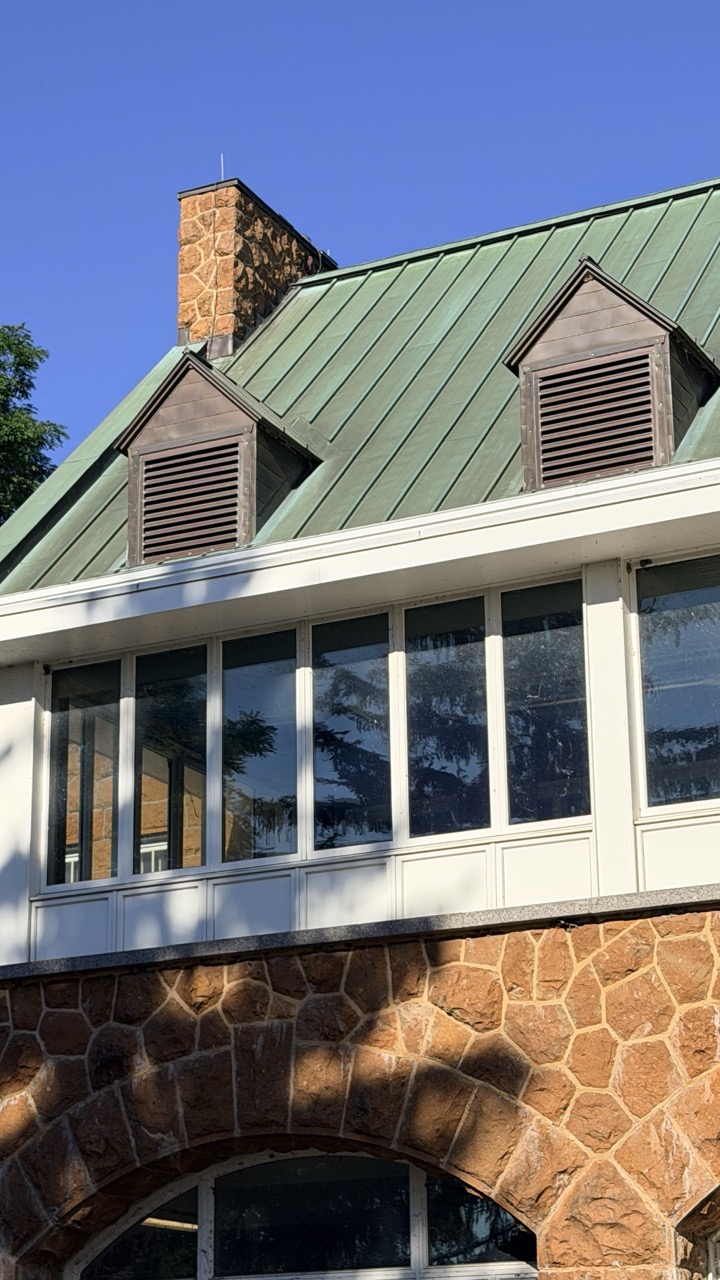
After Expo’s metal structures and the park’s wide-open spaces, the atmosphere becomes softer. Paths weave between planted areas and landscaped gardens surrounding the former Hélène-de-Champlain pavilion.
Then it’s time to leave Sainte-Hélène Island.
A small bridge connects it to Notre-Dame Island.
It only takes a few minutes to get from one island to the other, but the scenery gradually begins to change.
And, more importantly, the story changes once again.
Notre-Dame Island, the island that barely existed
Notre-Dame Island has one rather fascinating characteristic: unlike Sainte-Hélène, it is essentially artificial.
It was created in the 1960s for Expo 67, using, among other things, millions of tonnes of earth and rock excavated during the construction of the Montreal Metro.
Cycling across it today, it’s difficult to imagine that this landscape of lawns, mature trees and gardens was shaped by human hands only a few decades ago.
I pick up another BIXI and continue towards the Floralies Gardens.
The Floralies Gardens
I continue through the Floralies Gardens.
They are a legacy of the Montreal International Floralies, held in 1980—the first event of its kind in North America.
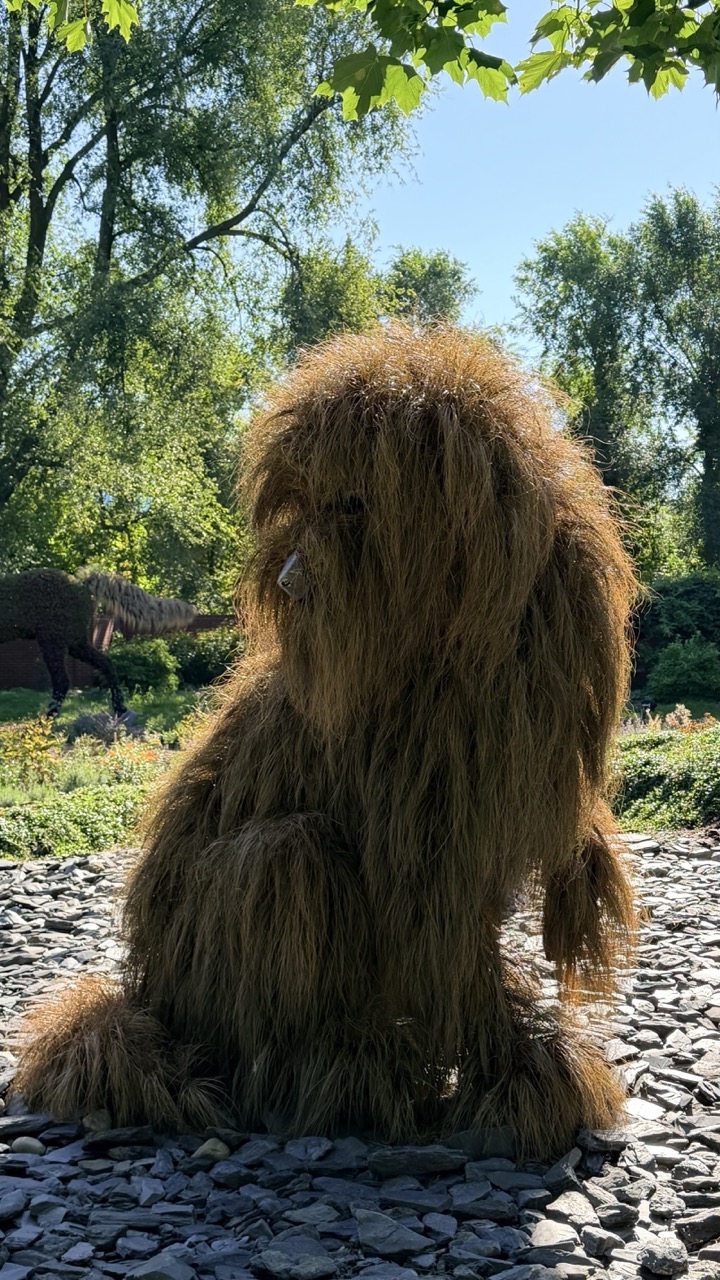
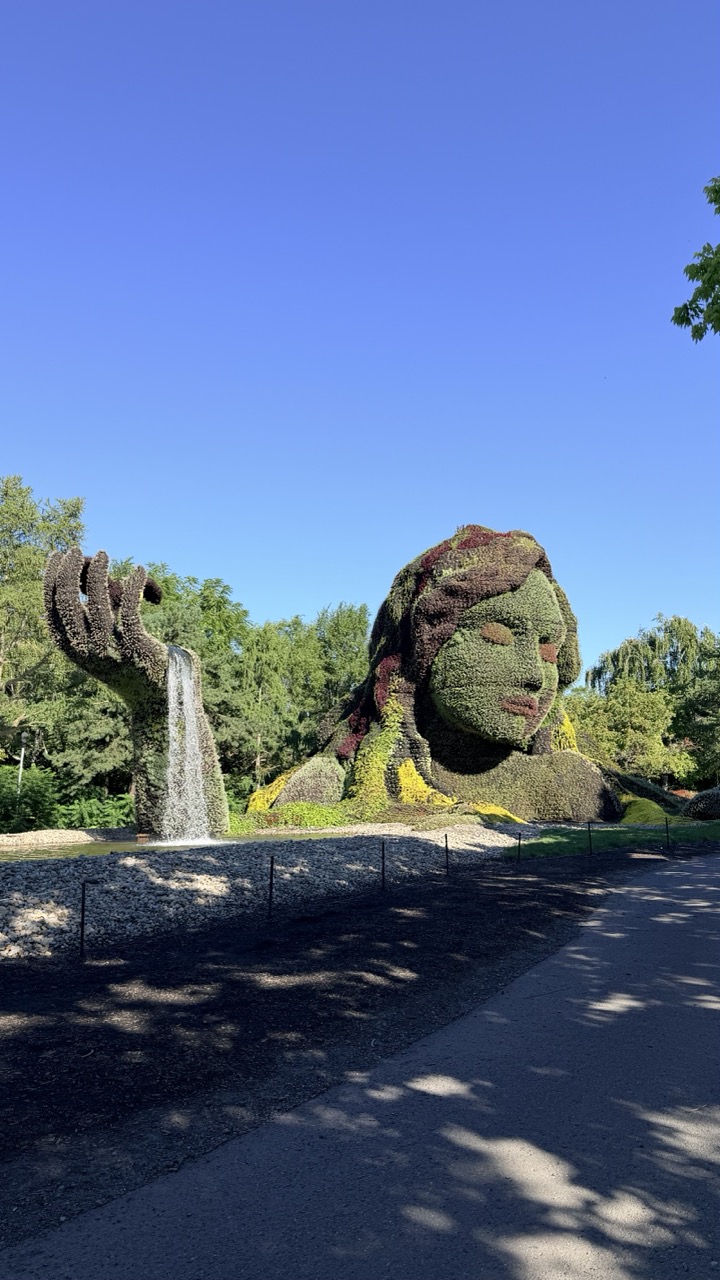
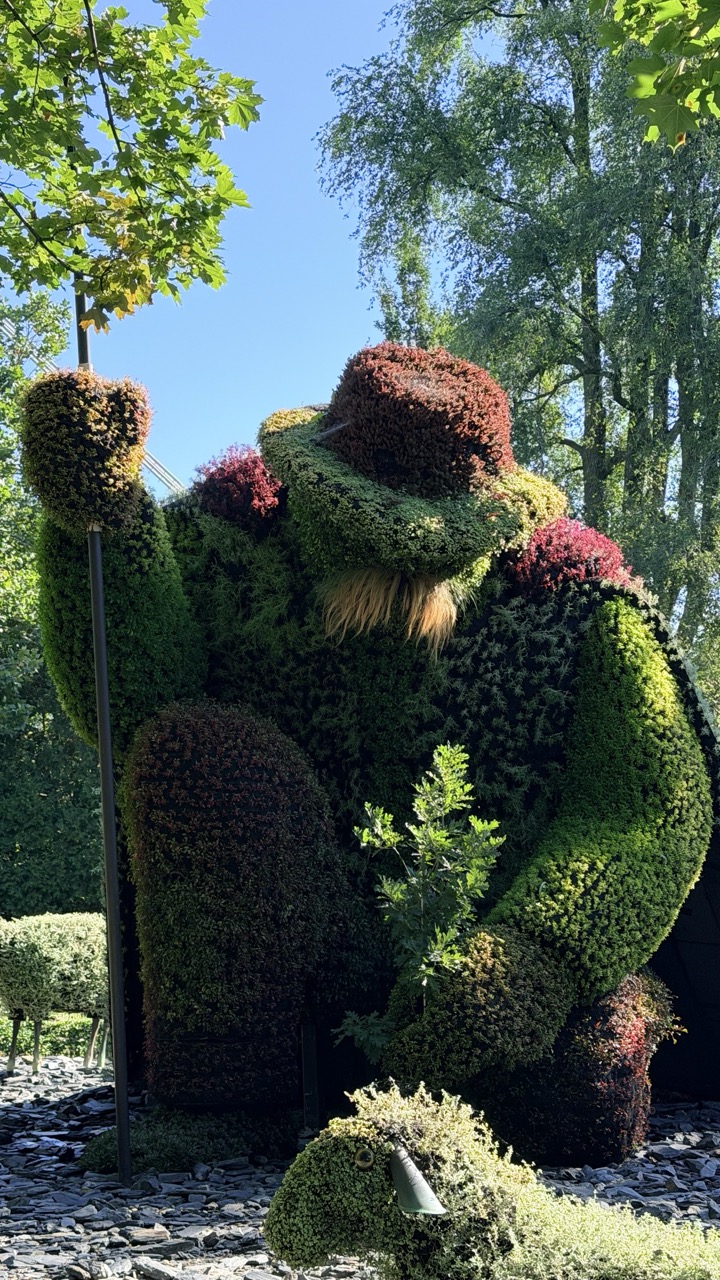
Today, paths wind between trees, flower beds and various plant sculptures. Some forms gradually emerge from behind the vegetation, giving the gardens a slightly strange quality, as though the line between sculpture and plant life had deliberately been blurred.
It’s also surprisingly peaceful.
Only a few hundred metres away are a casino and one of Canada’s most famous motor racing circuits.
That proximity sums up Notre-Dame Island rather well.
You can go from a garden to a Formula 1 track in just a few turns of the pedals.
Montreal Casino, another Expo survivor
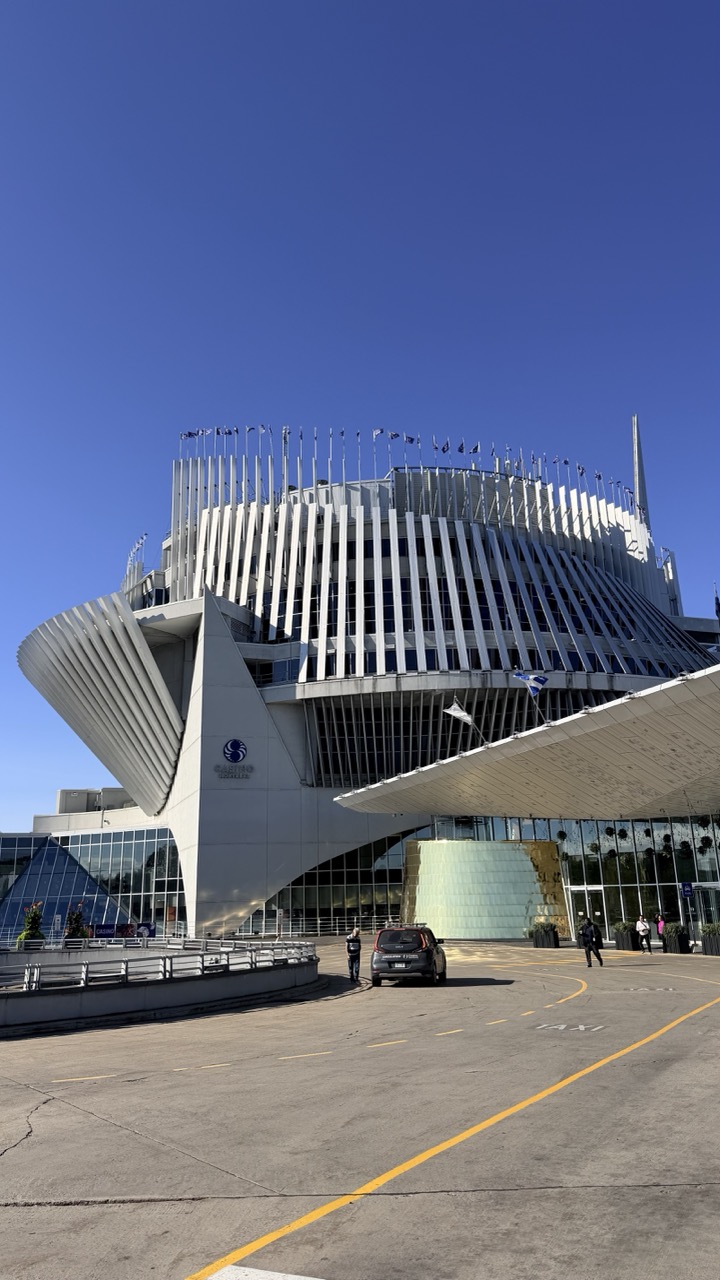
The Montreal Casino appears next along my route.
Once again, hidden behind the building you see today is another piece of Expo 67 history.
Part of the casino occupies the former French pavilion, which was reused after the exhibition before being transformed into a casino in the early 1990s. It opened in 1993 and has since been expanded several times.
I don’t linger. This morning, slot machines interest me considerably less than my next destination.
Because just a few metres farther ahead is something I never imagined I’d be able to do on one of Montreal’s public bike-share bicycles.
Ride on a Formula 1 circuit.
Riding a BIXI around the Gilles-Villeneuve Circuit
I reach the Gilles-Villeneuve Circuit.
And this time, I stay on my bike—a BIXI, I should point out 🤣.
When the circuit isn’t being used for races, it becomes an enormous playground for cyclists, runners and skaters.
So there I am, pedalling my BIXI along the very same asphalt used by Formula 1 cars. Meanwhile, actual serious cyclists keep overtaking me on their racing bikes. The only difference between them and me is probably the panting and the fact that I’m huffing and puffing like a steam train… while they aren’t!
Still, there’s something wonderfully funny about following the curves of the track on this chunky grey bike with a basket on the front, while far sportier cyclists glide past me on machines that suddenly seem much better suited to the surroundings.
The first Grand Prix held here took place in 1978. Gilles Villeneuve won the race that day, claiming the first Formula 1 victory of his career. A few years later, following his death in 1982, the circuit was renamed in his honour.
Today, between Grands Prix, the track returns to a much quieter existence.
And personally, I think it’s rather wonderful that infrastructure designed for cars travelling at several hundred kilometres an hour can spend the rest of the year as a place where Montrealers simply come to run or ride their bikes.
The beach I never actually get to see
I want to finish my exploration at Jean-Doré Beach.
On the map, it looks easy enough to reach.
In reality, I arrive in front of a fence.
I look around for a way through before eventually realising that the beach is part of a controlled area and that admission is charged. So I’ll be staying on this side.
The beach was developed in the late 1970s using more than 30,000 tonnes of sand. Even today, access to the swimming area requires a ticket during the opening season.
Never mind. I don’t particularly feel like paying just to look at an artificial beach for a few minutes.
So I get back on my bike.
Two islands and several different Montreals in one morning
When I think back on this morning, what surprises me most is probably just how many different landscapes and eras I crossed in so few kilometres.
I started above the St. Lawrence on Jacques Cartier Bridge, then walked alone through a forest where groundhogs and chipmunks seemed to outnumber humans. I found an old British fort behind the trees, a 1930s tower at the top of a hill and enormous works of art standing in the middle of open lawns.
A few kilometres later, I was beneath the vast metal skeleton of an Expo 67 pavilion, then wandering through gardens created for the Floralies before finishing on a Formula 1 track with a BIXI.
The strangest thing is that throughout all of this, downtown Montreal was never really far away.
All I had to do was look up.
The towers were right there, on the other side of the river.
And yet, at 7:30 in the morning, as I walked alone beneath the trees of Mount Boullé trying to decide whether the noise behind me was coming from some dangerous wild animal or, much more likely, a six-inch chipmunk, Montreal already felt a very long way away.
And perhaps that is precisely why I enjoyed discovering these two islands so much.
You don’t always have to leave a city to feel as though you’ve escaped it.
Practical information for visiting Sainte-Hélène and Notre-Dame islands
How much time should you allow?
To explore both islands at a relaxed pace, see the main points of interest and alternate between walking and cycling, I recommend allowing at least half a day. Add a visit to the Biosphère or Lévis Tower, or a swim at Jean-Doré Beach, and you could easily spend the whole day here.
How do you get to Sainte-Hélène Island?
I chose to cycle across Jacques Cartier Bridge, which brings you directly onto the northern part of Sainte-Hélène Island. Parc Jean-Drapeau can also be reached by Metro.
Exploring the park by BIXI
BIXI is particularly convenient because there are several docking stations around the park. I alternated between walking and cycling and switched BIXIs several times at the stations to stay within the periods included in my plan. Make sure you check the current BIXI conditions and rates at the time of your visit, however, as these can change.
Why come early?
If you enjoy peaceful places, I really recommend coming first thing in the morning. At 7:30 a.m., I had large stretches of the paths almost entirely to myself, and I saw an incredible number of groundhogs, squirrels and chipmunks.